At some point in your life, you’ve entered a store and bought something. And more than likely, the transaction involved a transaction registering machine. Maybe this was at a small mom & pop store with a cash register from the likes of Casio, Royal, and Sharp. Maybe it was at a coffee shop where you used a Square register. Perhaps you’ve even been to a large department store or supermarket and seen Toshiba and NCR registers at the check stands. Regardless of where you’ve been, you’ve seen cash registering machines in use, and maybe you’ve even wondered what’s going on behind the scenes.
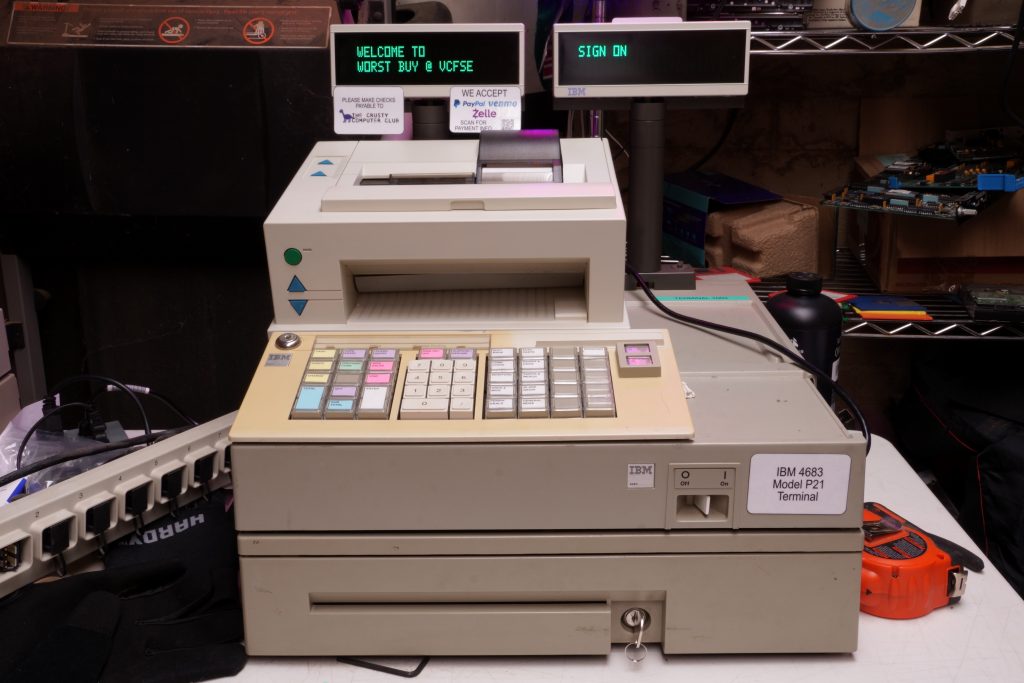
In 1986, IBM introduced the IBM 4680 Store System1, a PC-like Point of Sale (POS) solution – each terminal was based around a 80286 processor, the store controller was a standard IBM 5170 PC/AT with a special serial communications card, and the operating system across the platform was Digital Research’s Concurrent DOS/286, something you could have bought off the shelf back in the day. This set the stage for every PC-based POS that came after it, from 4690, SurePOS, and TCx, to solutions like NCR Aloha and many other solutions in use today.
But surely it wasn’t just the PC-like architecture of the system that made it such a roaring success, was it? Let’s take a moment to step back and look at what retail environments used to use before the 4680.
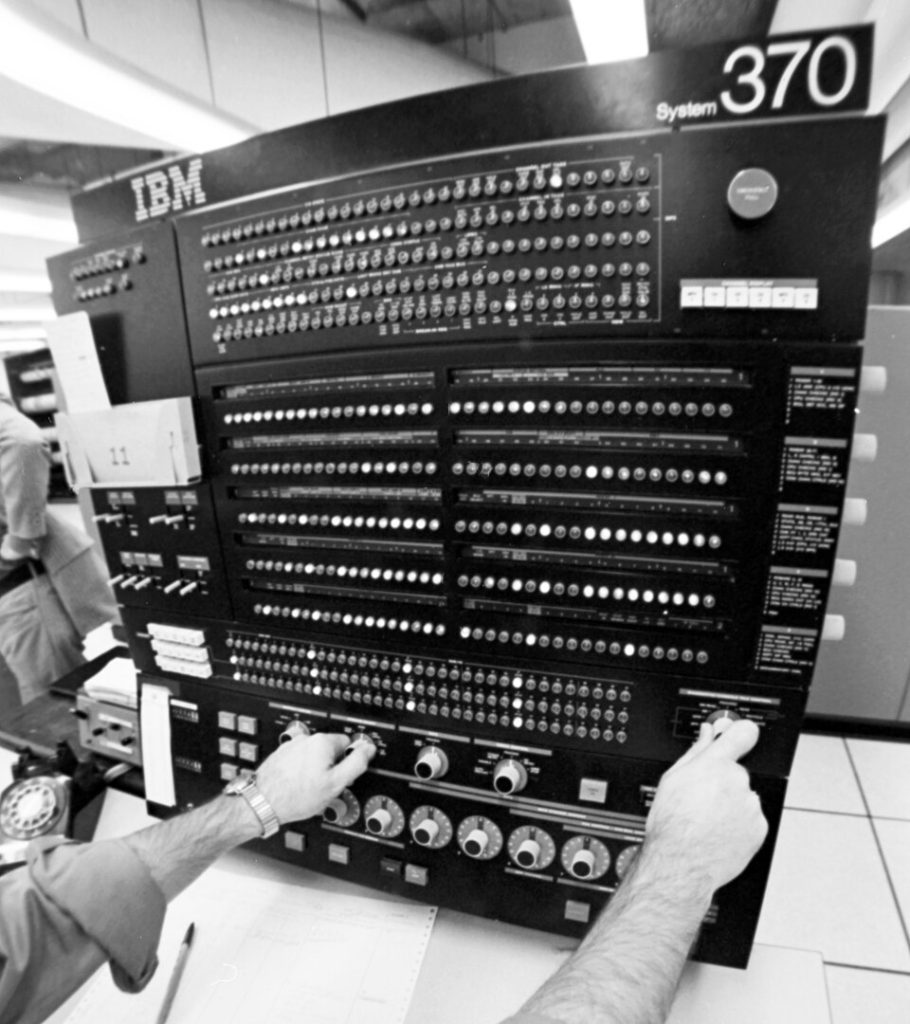
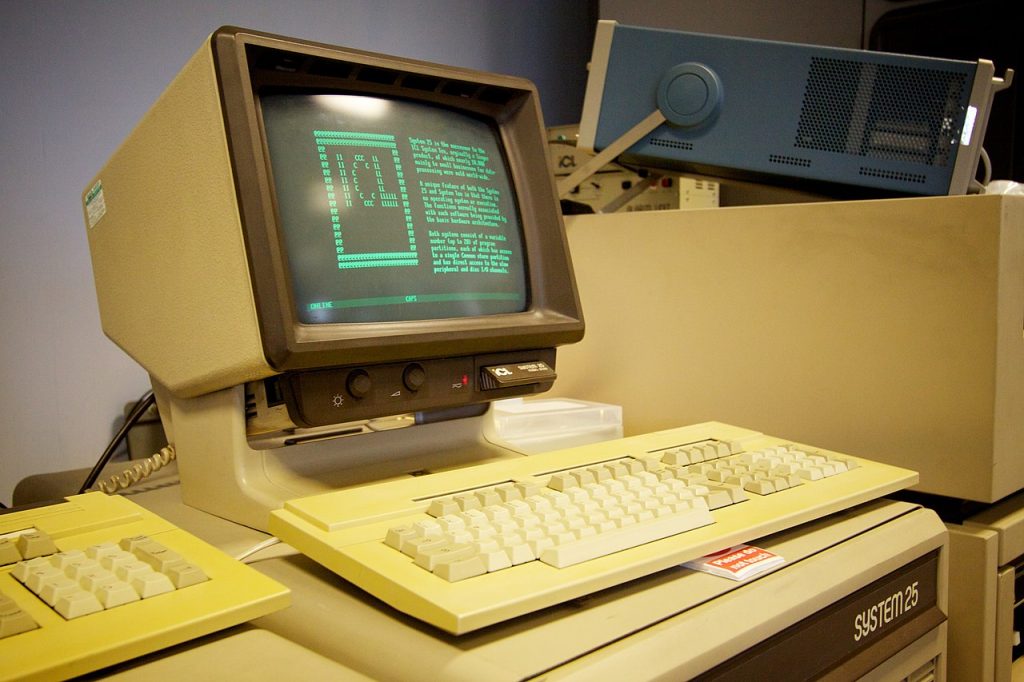
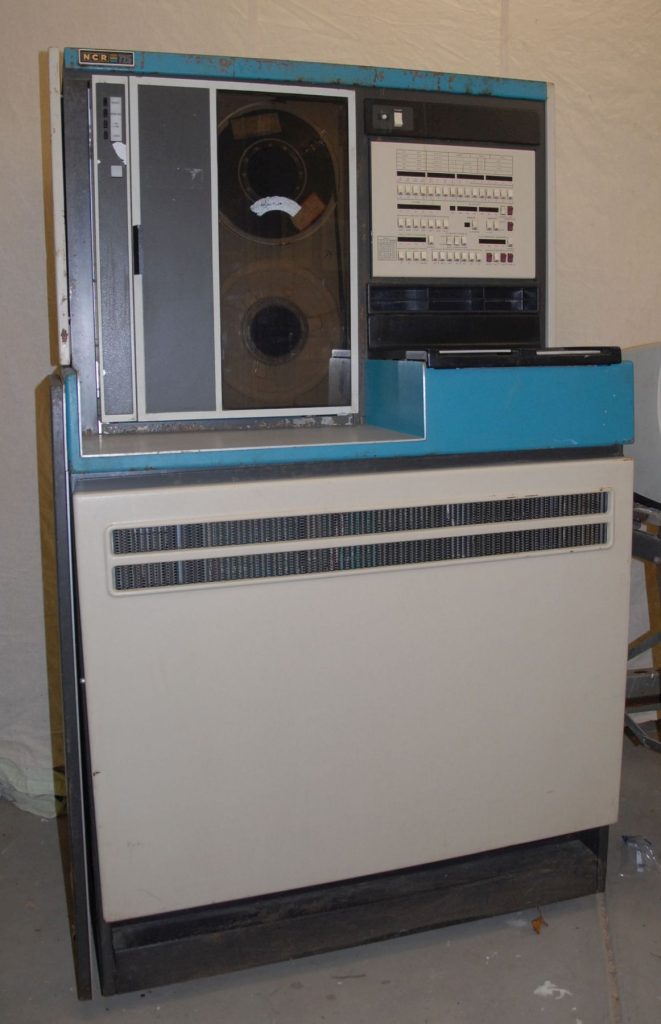
See footnote for attribution: System/3702, Singer System Ten3, NCR 7254
In the 1970s, computing power was rapidly on the rise, and prices were rapidly decreasing. Large businesses wanted some computing power for themselves, and who could blame them? Having a centralized computer that can track inventory, sales, and generate reports about each individual store was an amazingly tantalizing idea, and would give great insight into the day’s sales that the old, manual cash registers of before just couldn’t provide.
To fill this new niche were several companies: National Cash Register, Singer-Friden (later ICL), Data Terminal Systems (DTS), and of course, IBM. Each of these systems had their champions and were well-regarded in their days: NCR and IBM duked it out over department and supermarket supremacy, where Singer-Friden had Sears. And of course in those days, as now, there were plenty of other bit players that unfortunately have been lost to time.
We’ll primarily focus on IBM’s offerings from here on out (naturally), but each of these systems had some challenges that we might now call shortcomings – or perhaps in today’s world, a return to form:
- Inflexibility: The only hardware you could attach to your registers was vendor-approved equipment. There was not yet the vast industry surrounding cash registering equipment like there is today.
- Lack of Customization: Most registers lacked the ability to be customized by the end user. There were a few minor customizations that could be performed, like perhaps redefining a key or two on the keyboard, but by and large the equipment was fixed and you could not customize it in any meaningful way.
- Reliance on Mainframes: The IBM 3650, 3660, and 3680 all required a System/370 mainframe as its host. If your link to the mainframe went down, you were not able to process sales. 5 6 7
Regardless of how it seems on paper (what little of it still exists, anyway), these early computerized systems defined the 1970s and early 1980s, and there are plenty of videos to be found of 3600-series registers in use in the 1980s. Here’s one from a Famous Barr store (including a strange video terminal in a delightful shade of 70s brown), and here’s one from a Target in February 1986 – just one month after the 4680 announcement.
But time marches on. As we all know by now, in 1981 IBM Boca Raton’s little skunkworks projects, the IBM 5150 Personal Computer, was released to the public. It set the microcomputer world ablaze, and was cloned relentlessly by computer companies across the world. In 1984, the PC and PC/XT were followed up with the IBM 5170 Personal Computer AT, IBM’s first entry into the 80286 market. And even though Bill Gates said that the 286 was “brain dead,” it did bring true multi-tasking to the PC world and operating systems such as OS/2 and XENIX 286, and DOS shells like DesqView and Windows/286 were able to take advantage of the 286’s new features. Digital Research even had an operating system called Concurrent DOS/286.
At the time of the PC/AT’s launch, the 3600 retail lineup was now well over a decade old. And that brings us to 1986, when the IBM 4680 Store System was announced. Everything from the 3600 Store Systems had been improved:
- It was a PC-based system, lowering the cost of entry to the business
- The store controller was initially an ordinary IBM PC/AT with a modified Concurrent DOS/2868; later controllers were PS/2s and dedicated 4684 controllers
- The terminals were heavily modified, headless 286 PCs running the store application across a net-booted copy of Concurrent DOS
- The hardware and software was customizable by the end user, they could build any application and any hardware configuration that met their needs
- The entire store could run in the controller, eliminating the need for a mainframe backend to be the store controller
- But 4680 could still talk SNA and start 3270 sessions if the store desired
- Supported store and forward, so if the controller went down the terminals would hold onto sales and forward them to the controller for later processing
Later in 1986, the first 4680 installation went live – a Sam’s Club in Tennessee9. From there, Walmart would converge entirely on 468010, and the rest of the retail world would follow suit. In our research for our restoration proejct, we discovered that there were a multitude of stores that would adopt the 4680 Store System for their retail needs:
- Zayre
- Wal-Mart / Sam’s Club
- Walgreens11
- Wegman’s
- Safeway
- Macy’s12
- Woolworth’s13
- Parisian
- Giant Eagle14
- Ron & Lloyd’s15
- Food Lion16
- Bradlee’s17
- And likely many, many more for which the historical record does not account for.
To wrap things up in a nice, neat bow, it was only a few years later in June 1993 when IBM announced the 4690 Store System18, which was a backwards-compatible upgrade to the 4680 lineup. Almost every peripheral that a store had invested in during the 4680 days could be brought forward to the new system, and was even directly backwards compatible with the older 4680 terminals so a store could upgrade to a new controller and upgrade their terminals as time and money permitted. In fact, this backwards compatibility lasted until V6R2 of the 4690 OS; by V6R3 this support was finally dropped.
Over the years as the industry grew, IBM would continue to add new features to 4690 OS – Java, TCP/IP, Self Checkout, USB, SSH, a graphics stack, and more. Finally, in 2012, IBM announced19 they were selling their entire retail business to Toshiba, who has now repackaged 4690 OS as a virtual machine inside a new, Linux-based operating system called TCx Sky.
In our next post, we’ll take a look at the 4683 hardware itself.
Sources:
- PC Magazine, March 11 1986 – PC AT for Retailers ↩︎
- IBM System/370 Console, Wikimedia (CC BY-SA 4.0) ↩︎
- ICL System 25 Console, Wikimedia (CC BY 2.0) ↩︎
- NCR 725, DoPECC ↩︎
- IBM 3650 Retail Store System Brochure ↩︎
- IBM 3660 Supermarket Store System Brochure ↩︎
- IBM 3661 Store Controller Brochure ↩︎
- European Review, March 1986 – IBM selects Concurrent DOS-286 for PC AT retail system ↩︎
- Robert B. Davis, February 27 2026 – The Secret Tour: Building the World’s First IBM 4680 System (1986) ↩︎
- Robert B. Davis, March 13 2026 – Wal-Mart’s $10 Million Shortcut: The NCR-AW-IBM Bridge (1989) ↩︎
- Vampire Robot – Last minute Christmas shopping at Walgreens in 1993 (YouTube, hash for Grayjay / Invidious: bsRKSWb1Gfc) ↩︎
- We found some Macy’s price tags buried in one of our 4680 cash drawers. ↩︎
- Vampire Robot – Early Christmas shopping at a Woolworth store in 1990 (YouTube, hash for Grayjay / Invidious: xgHPK9IlZps) ↩︎
- Supermarket News, November 7 1994 – GIANT EAGLE INTRODUCES SIL TO 8 UNITS, SETS WIDE USE ↩︎
- Supermarket News, January 9 1995 – RON & LLOYD’S HONES TARGETED MARKETING ↩︎
- Supermarket News, February 10 2003 – TIME FOR A POS UPGRADE ↩︎
- RJD kid – Bradlees at Christmas time during December 1989 (YouTube, hash for Grayjay / Invidious: 6fuPvwUjeHI) ↩︎
- IBM, June 1 1993 – Announcement Letter Number 293-281 ↩︎
- Toshiba Global, April 17 2012 – Toshiba Tec to Acquire IBM’s Retail Store Point-of-Sale Business ↩︎
.jpg)
