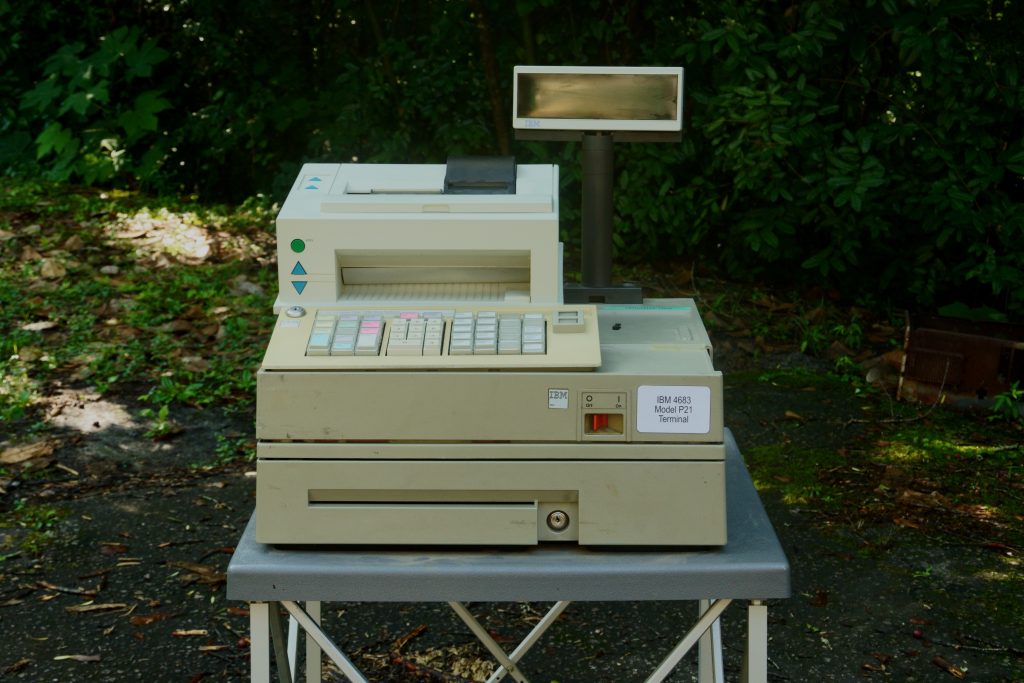
As long-time members of the Atlanta Historical Computing Society, Vintage Computer Festival Southeast, and the Southern-Fried Gaming Expo, we always like to showcase something cool from IBM’s business computing history. Normally, we like hauling our midrange machines around but this year we took a break from that and brought our 4680 terminals instead.
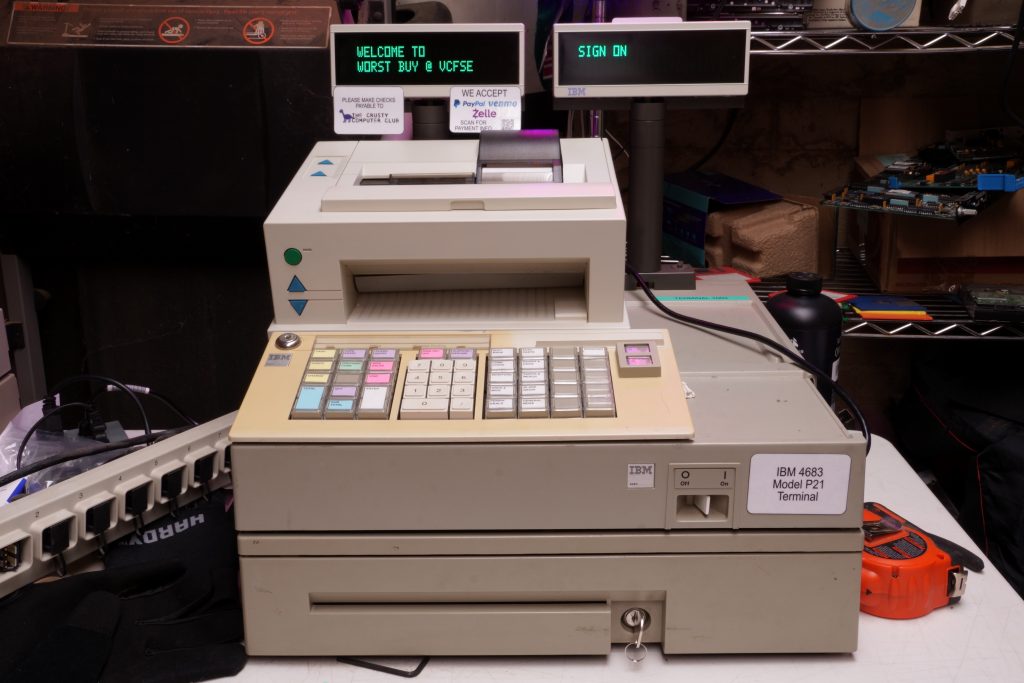
Our Store System is configured with the following: Two 4683-P21 terminals, one 4683-002 Partner, a 4800-784 terminal (lovingly called the “anachronism terminal”) and a 4800-783 Store Controller.
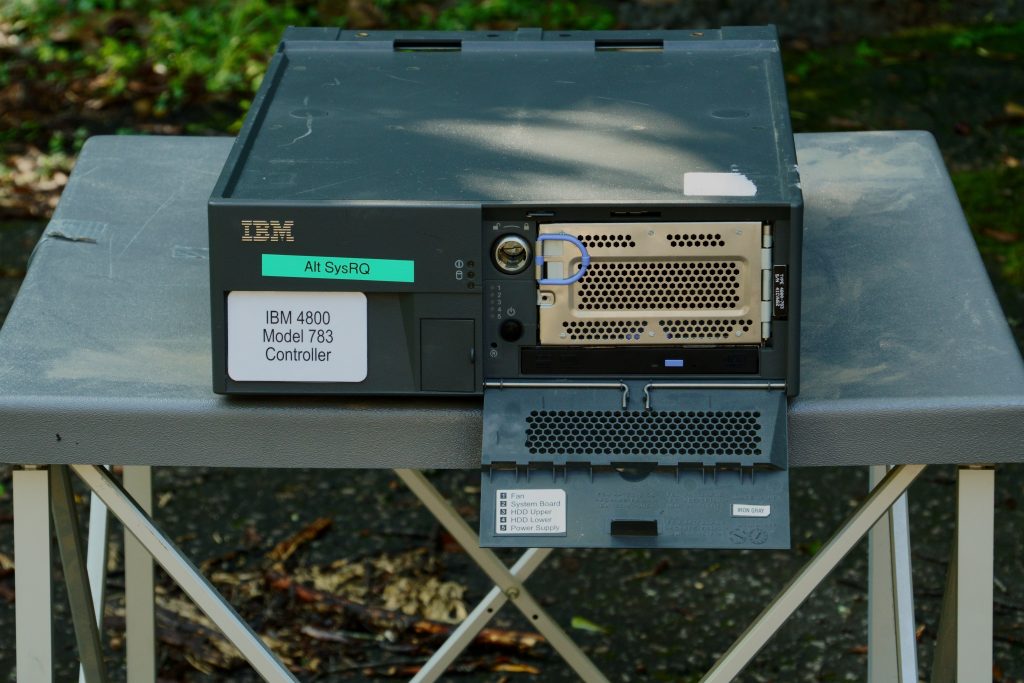
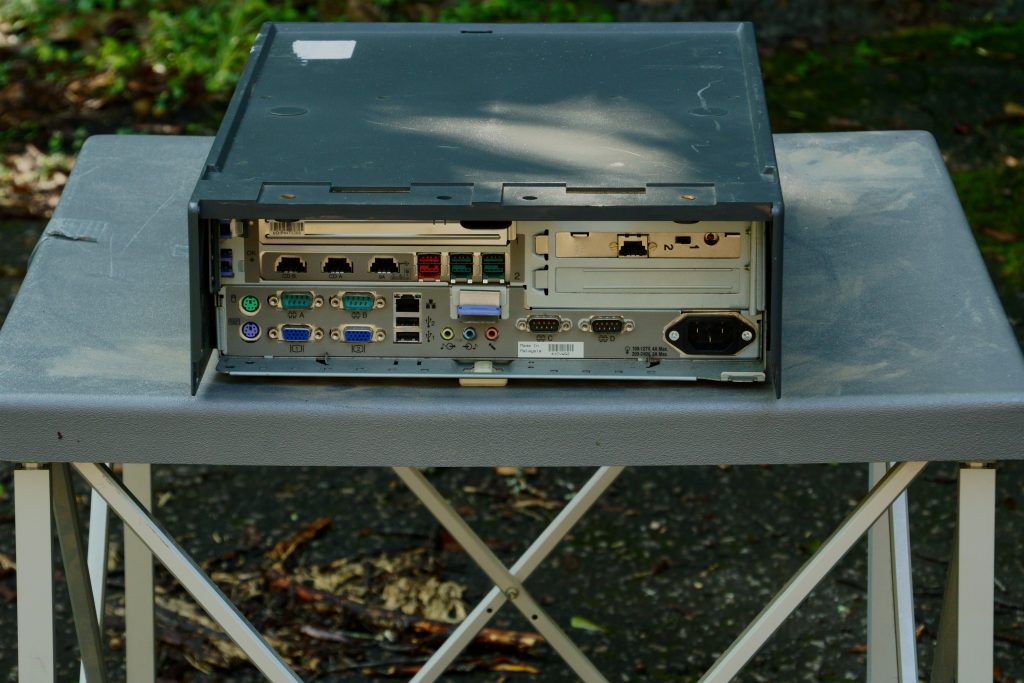
The 4800-783 is quite the anachronism here; we would have loved to use a real 5170 Store Controller, or 4684 or PS/2 with 4680 OS but unfortunately the original 4680 OS has been lost to time. Fortunately, using a 4800-783 does give us several advantages: the OS release we have is fully backwards-compatible with 4683 terminals and the physical network layer, plus it is new enough it allows us to run more modern 4690 and SurePOS terminals all side-by-side.
Our application of choice is the IBM General Sales Application, first introduced alongside Version 1 of the 4690 OS. The IBM Supermarket Application is also available but we chose not to run it for our VCF Southeast exhibit this year. IBM provided a complete SDK and the source code to both applications so that the customer could modify and extend the sales application to meet their needs. For example, the “User Exits” extension can be installed to run a custom application after a transaction completes. One use for the User Exits is to start a 3270 session to a mainframe host to update database records.
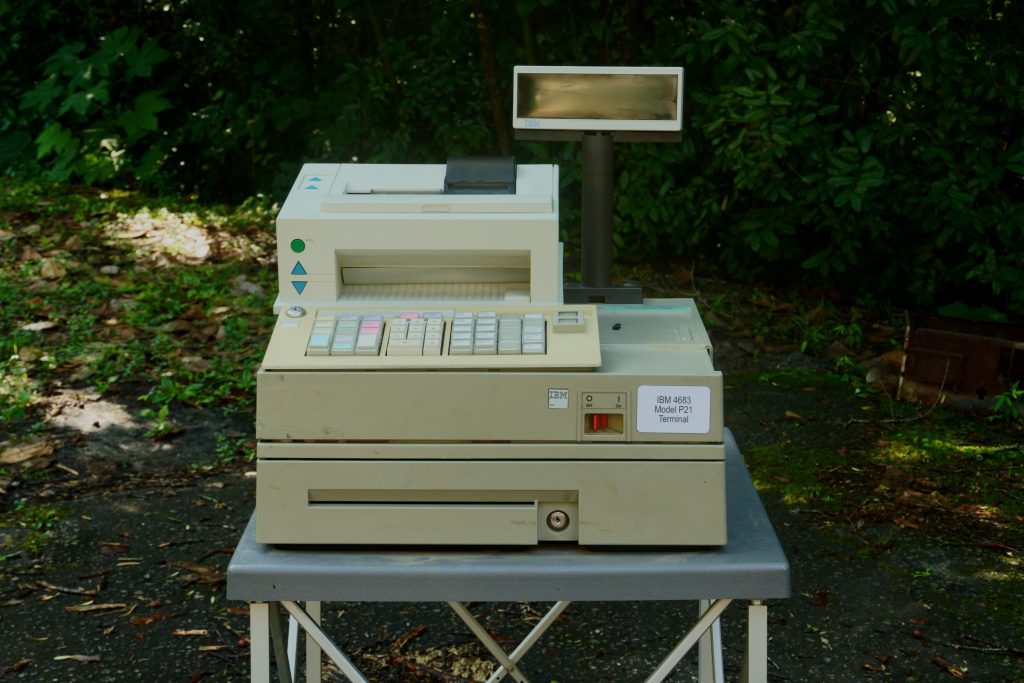
The store controller, however fascinating it may be, is nowhere near as interesting when compared to the 4683 terminals themselves. First, let’s take a moment to look at the right and back side of the terminals. The back side would have originally contained a NiCd battery pack that would keep the terminal’s RAM alive. We will touch on this later but for now we are just glad the original service provider removed the batteries before storing them away.
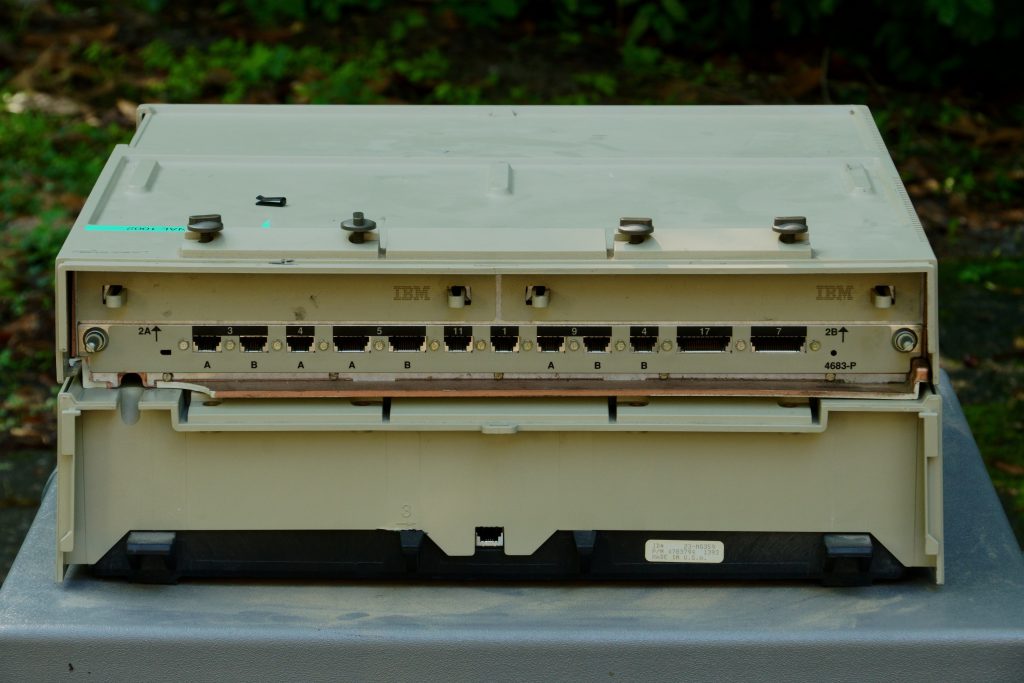
On the back is where things get interesting. You won’t find any normal-looking ports back here; every connector is in fact a Shielded Data Link connector – in fact, the same connector used in period Model M keyboards. Each port is keyed and serves a unique purpose. From left to right:
- 3A/B – Cash drawer (still in use)
- 4A – VFD Pole Display (Carried over into 4690, still supported by TCxSky but requires a hardware option)
- 5A/B – Keyboard (No longer in use, replaced by USB and touchscreens)
- 11 – Partner Terminal (not supported after 4680)
- 1 – Store Loop (Carried over into 4690 as an option but no longer supported)
- 9A/B – Barcode scanners (No longer in use, replaced by USB)
- 4B – Second display (Pole display or Customer Display)
- 17 – Scanner Scale (no longer supported)
- 7 – Printer (replaced by Powered USB)
Above the tailgate, as it’s known, are the 2A and 2B card slots. These were feature cards that could be added to expand a 4683 terminal with options such as:
- Video Display (Actually a dedicated TTY port and would be paired with a 3151 ASCII InfoWindow terminal)
- RS-232 Port
- Token-Ring
None of our machines are equipped with these expansion options, and we have not seen any on the secondhand market. We will speculate on this more in the third and final part of this series.
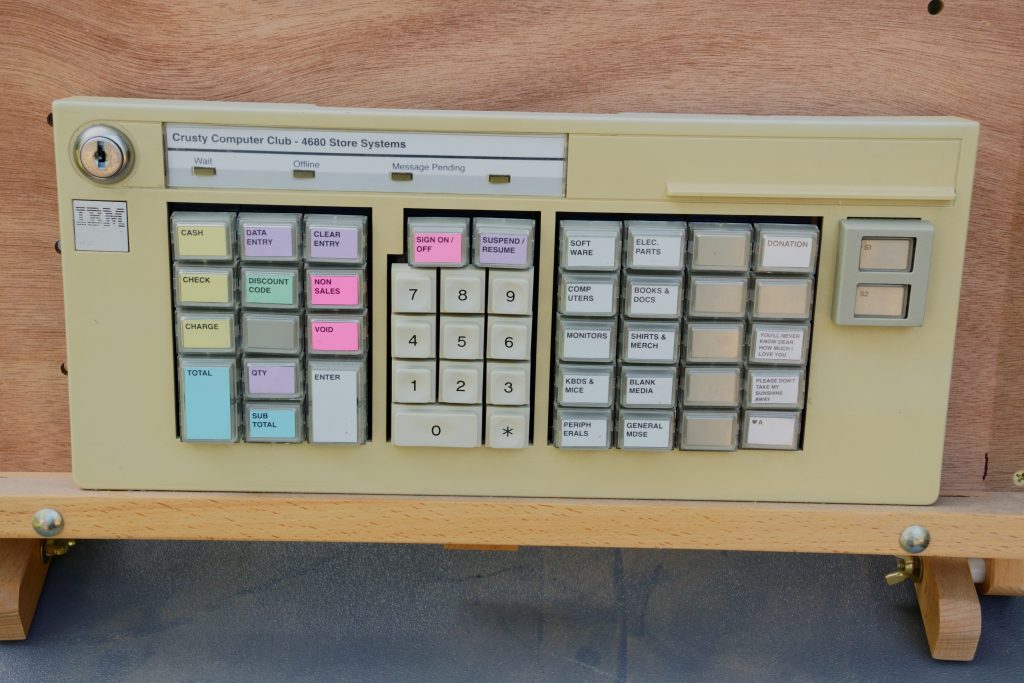
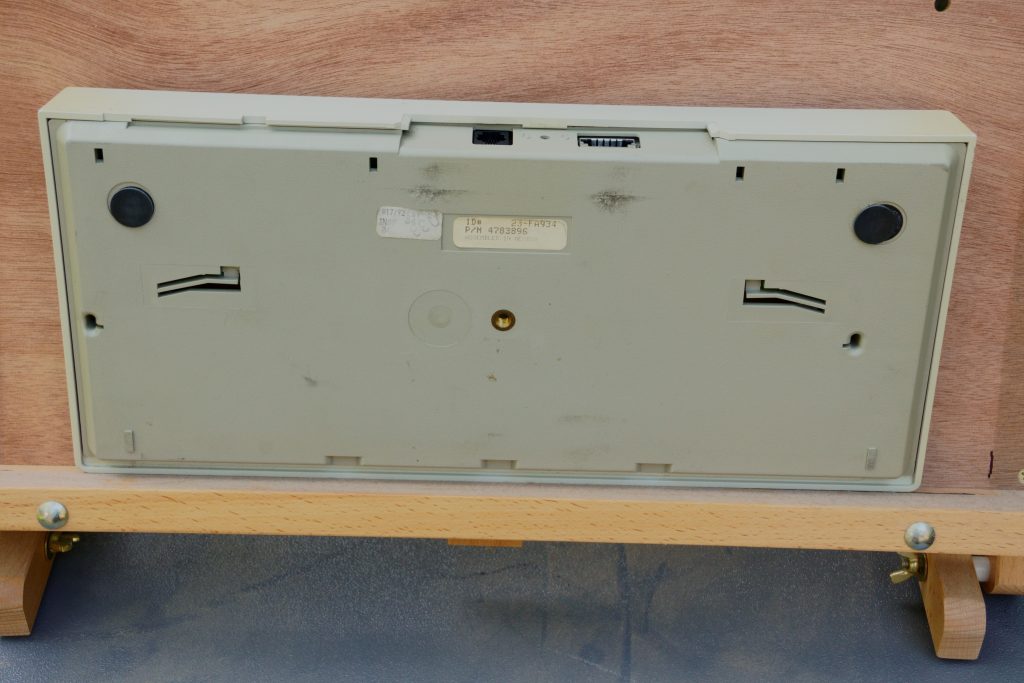
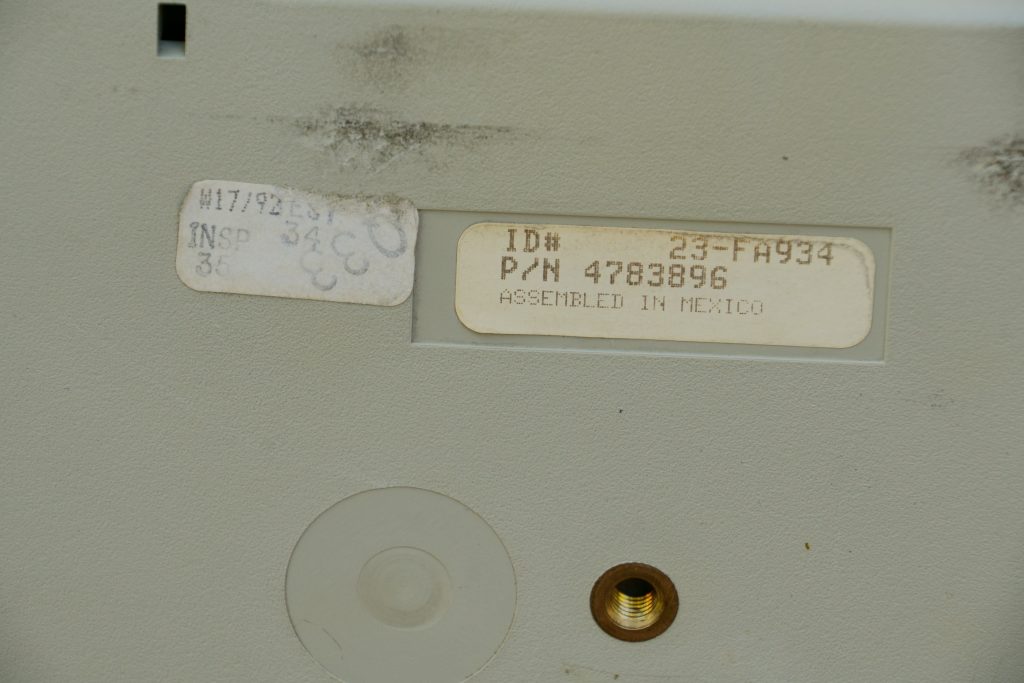
There were three keyboard options available for the 4680 Store System: the 50-key which is pictured above, the Alphanumeric POS (ANPOS), and the Matrix Keyboard. Each were re-legendable, meaning the customer was able to configure any unprinted key to perform any application action desired. Each key was equipped with a removable plastic lens with which the customer was able to place a label into so the cashier could perform their jobs. We have equipped our keyboards to behave like a department store might have configured theirs.
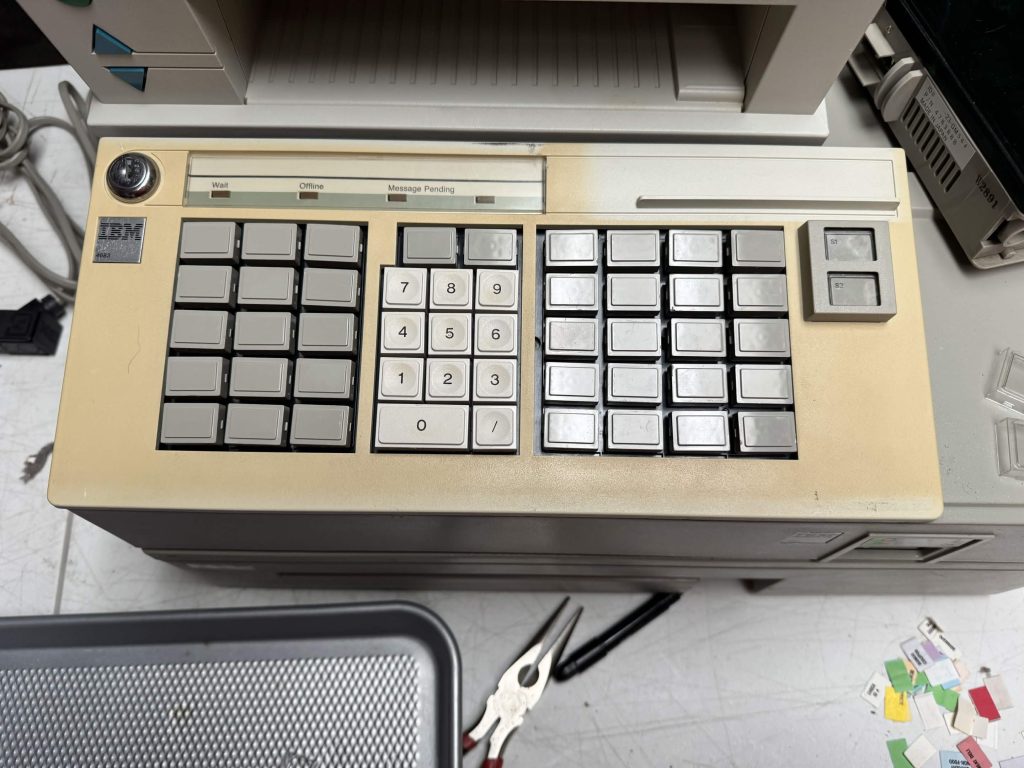
As you might be able to tell by the yellowing pattern on ours, there were two additional keyboard options: the magstripe reader and the Operator Display. Both are fairly self-explanatory – if your store was equipped to handle credit card processing through your PoS terminal or your store issued gift cards, you could accept them right at the keyboard. The Operator Display was a small, likely Hitachi-compatible LCD display that would allow the cashier to see pertinent information about the transaction being performed. In our research, it seems like most stores used a single VFD for both customer and operator, two VFDs – one for customer, one for operator – or a customer-facing VFD and a cashier-facing CRT.
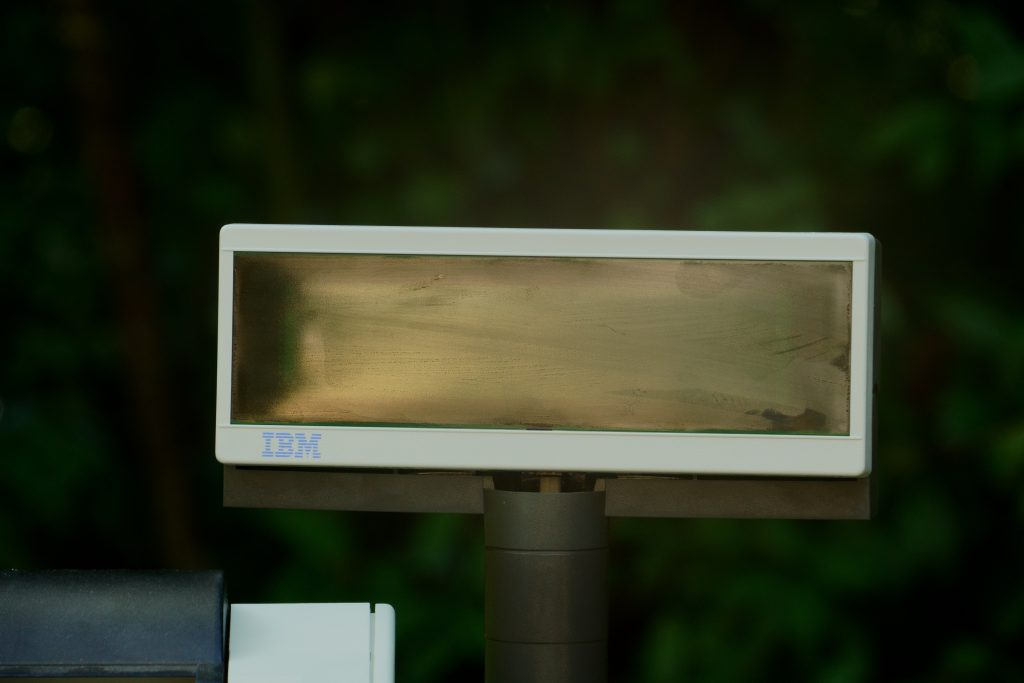
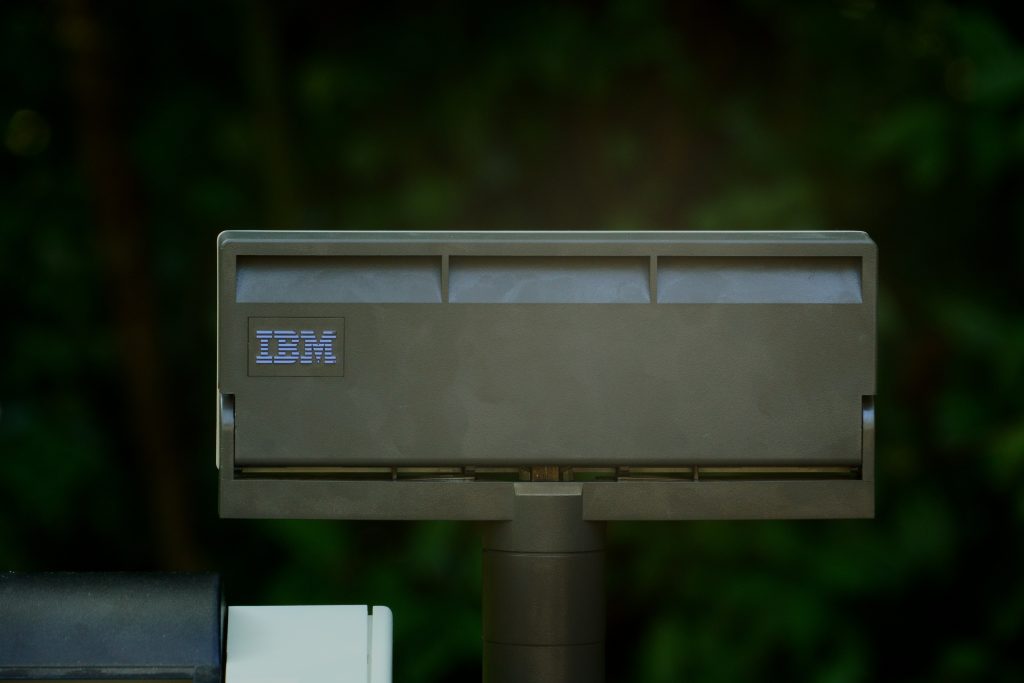
Speaking of the pole displays, these are ours. These are the second anachronistic concession we’ve made as these are actually the 4690 VFD II Displays, and several of them are actually from Toshiba rather than IBM. One of the great things about 4690 OS’s backwards compatibility is that newer peripherals will still work just fine with older hardware, so although these are the “wrong” displays for the period they work without issue.
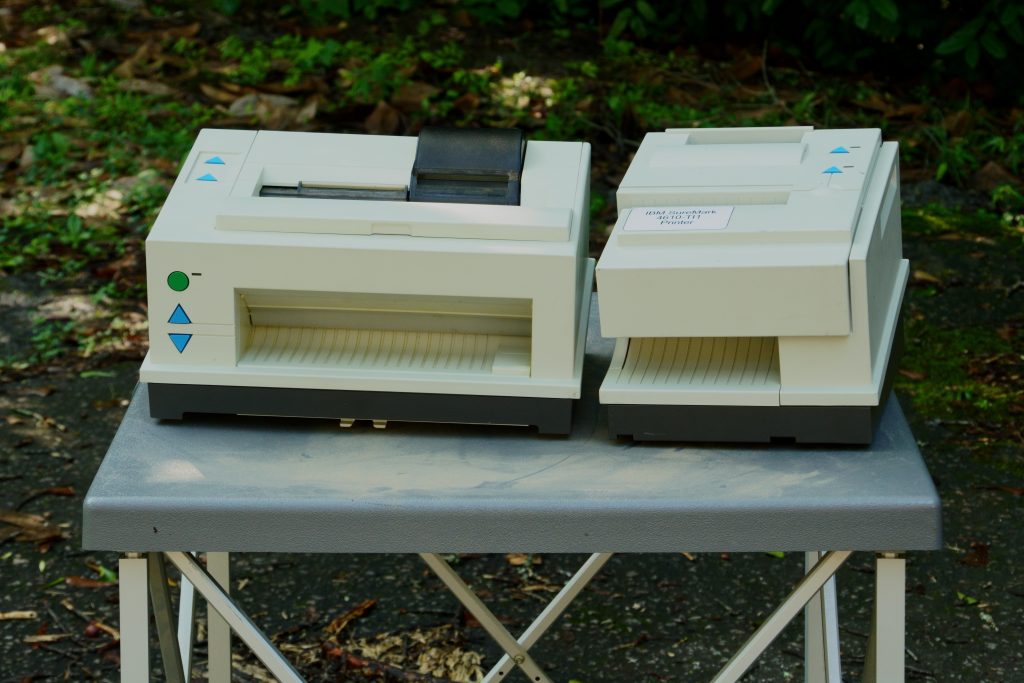
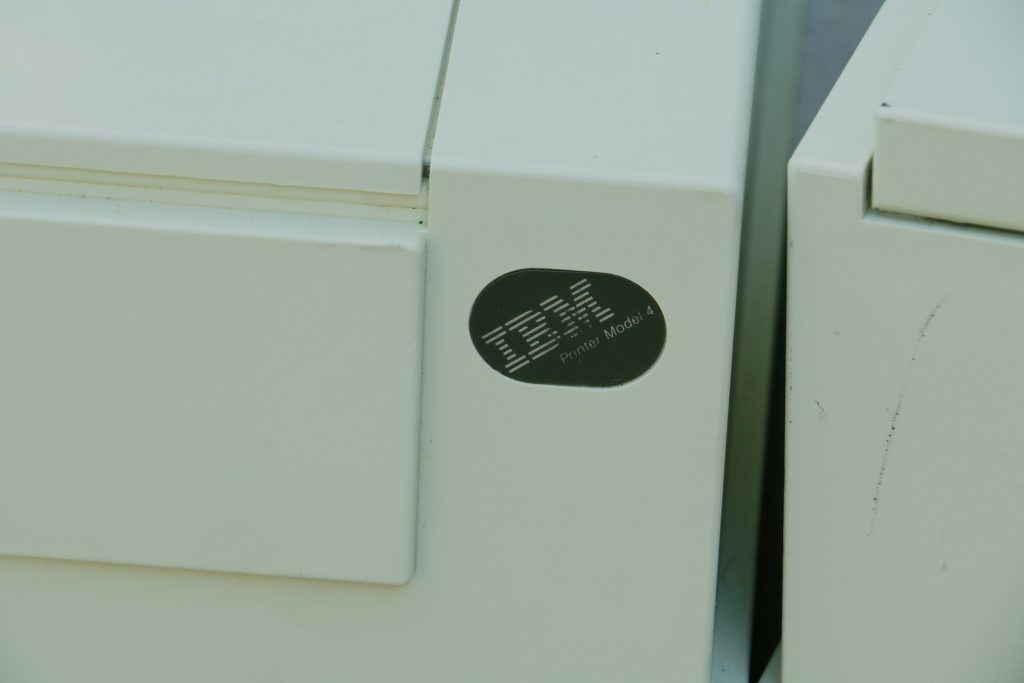
We have two printers in our 4680 PoS collection: On the left is a Model 3/4 printer, and on the right is a 4610 SureMark printer. The Model 3/4 printer is the second generation retail printer and is very similar to the original Model 1/2 printers the 4680 Store System shipped with. Both support check and document endorsement, and both feature a customer receipt with paper cutter, and a journal tape receipt. Notably, the paper in the impact printers is of an annoying, no longer produced size – 2.75″ wide.
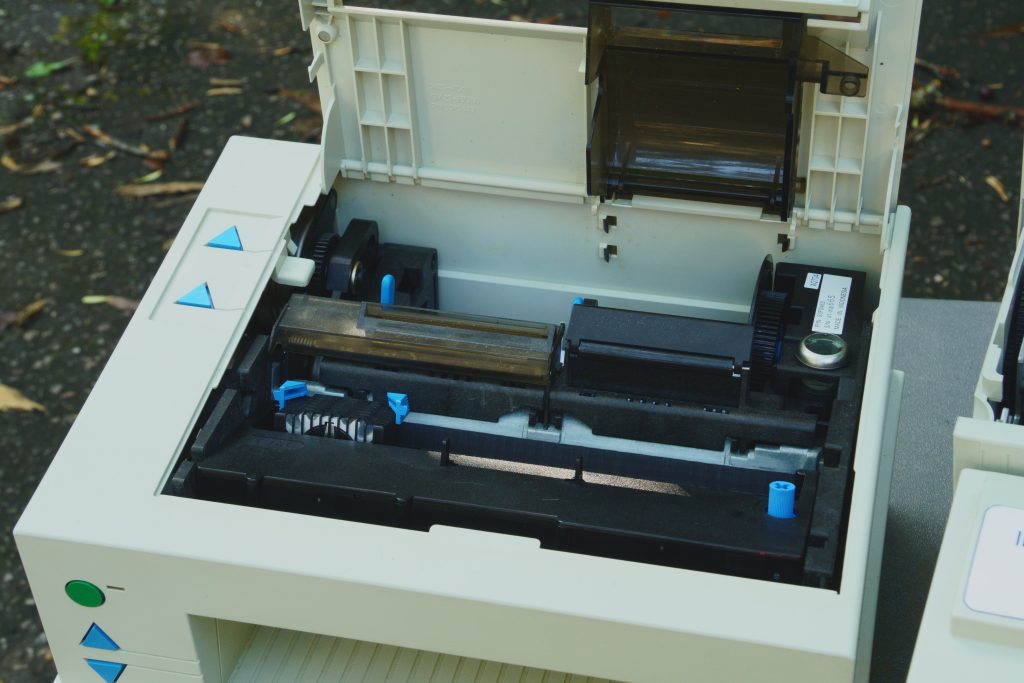
The 4610 SureMark is again, another anachronism. It was released later on in the life of the 4690 as a replacement for the Model 3/4 printer. It is a thermal printer that supports modern 3″ thermal reels, and lacks a physical journal tape, instead opting to store the journal internally in an EPROM.
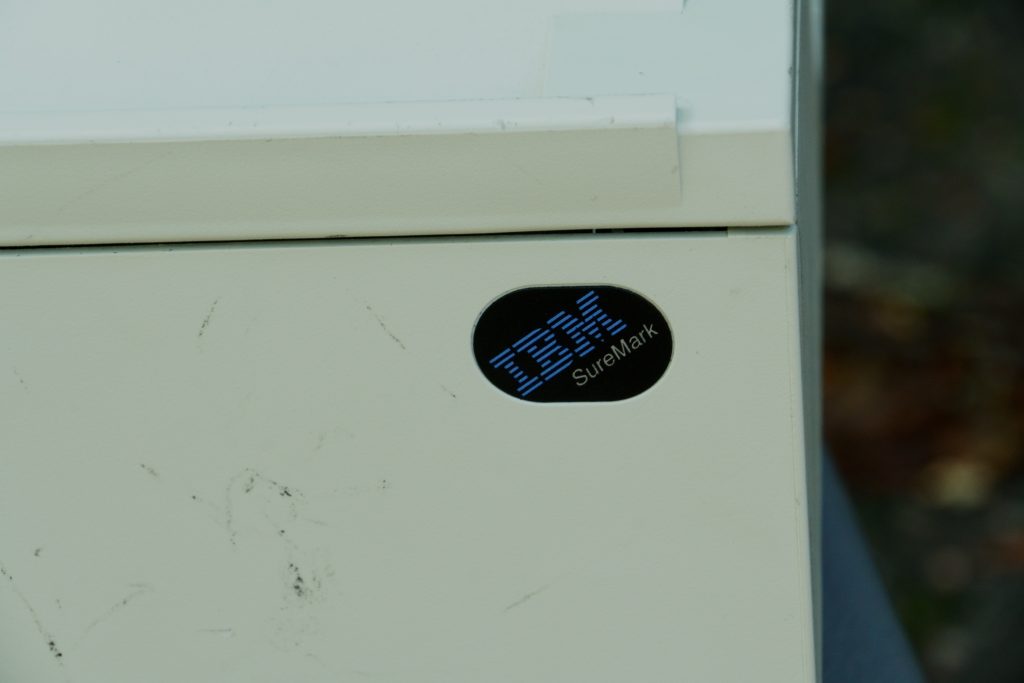
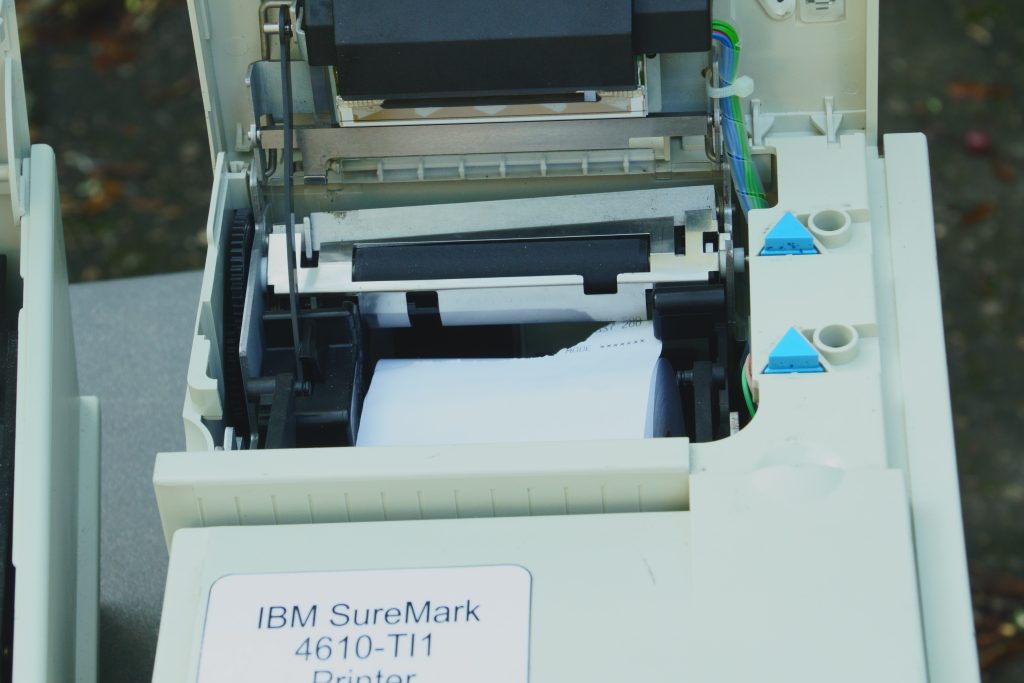
This printer, although still “wrong” for the period, is still important to our story: the original 4610-TI1 and TI2 have built-in support for the Model 3/4 data stream, while later printers such as the TI3 and TI4 initially had it but most have had a firmware update that removes the Model 3/4 emulation. TI5 and later do not support the Model 3/4 emulation, and so require the 4610 Model 3/4 Emulation LPP to be installed on the Store Controller (Product Number 5799-QYN). If you have this software, please contact us for preservation.
Inside the Terminals
The inside of the 4683 terminals is where things get even more interesting. Let’s look at some planar boards!
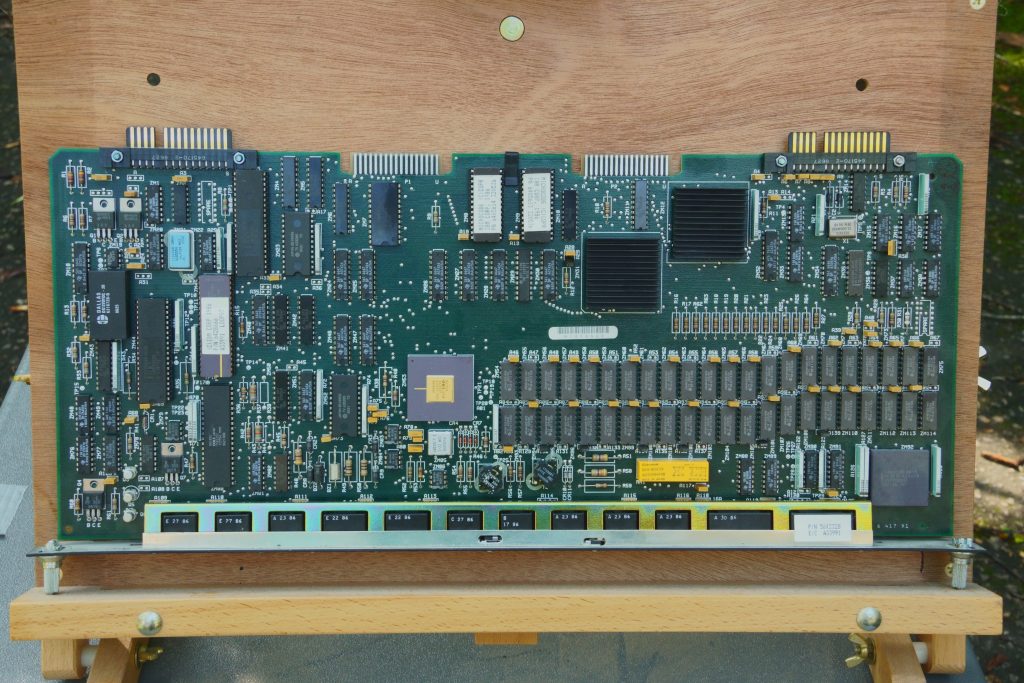
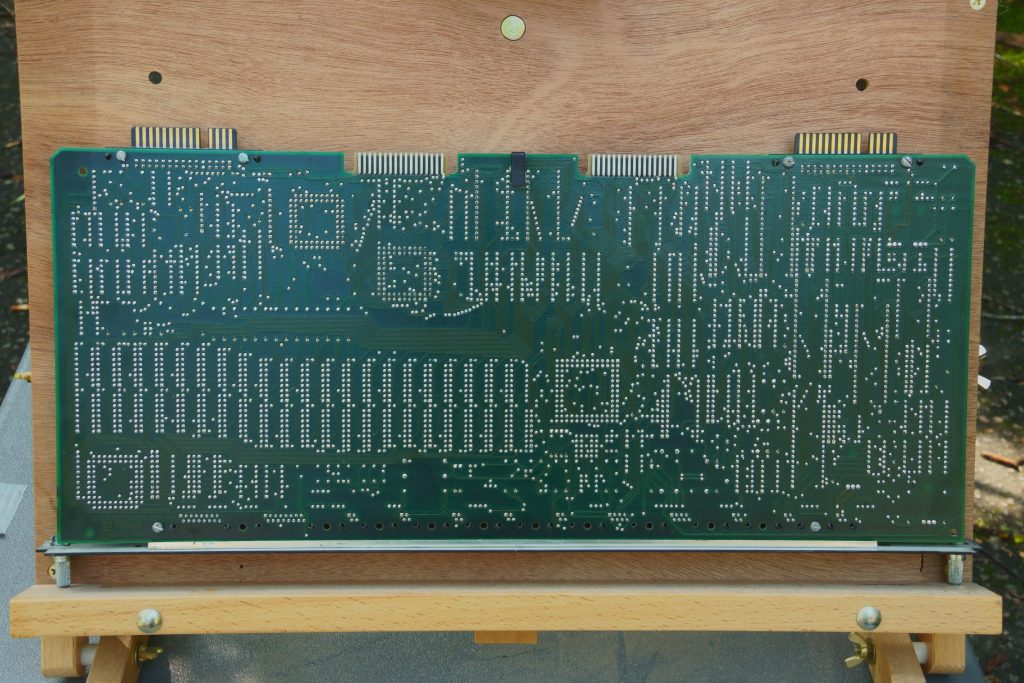
In our restoration, we ended up with a faulty, first-generation 4683-001 planar board. Here you can see the 286 CPU, the 1MB of discreet Texas Instruments RAM, and the assorted components that make up the rest of the system such as the RS-485 controller and the Dallas NVRAM chip. That’s right – 4680s, 4690s, and even SurePOS units with the Store Loop option all feature a Dallas IC. Thankfully, these are not the DS1287 chips and they all still function perfectly, 40 years later. These NVRAM chips were used to hold terminal configuration such as the terminal ID, name of the store application, and various hardware configuration details. This board has a fault (likely a bad RAM IC) that prevents it from completing an IPL, but we are not able to determine the fault as IBM left no diagnostic provisions on the 4683 boards.
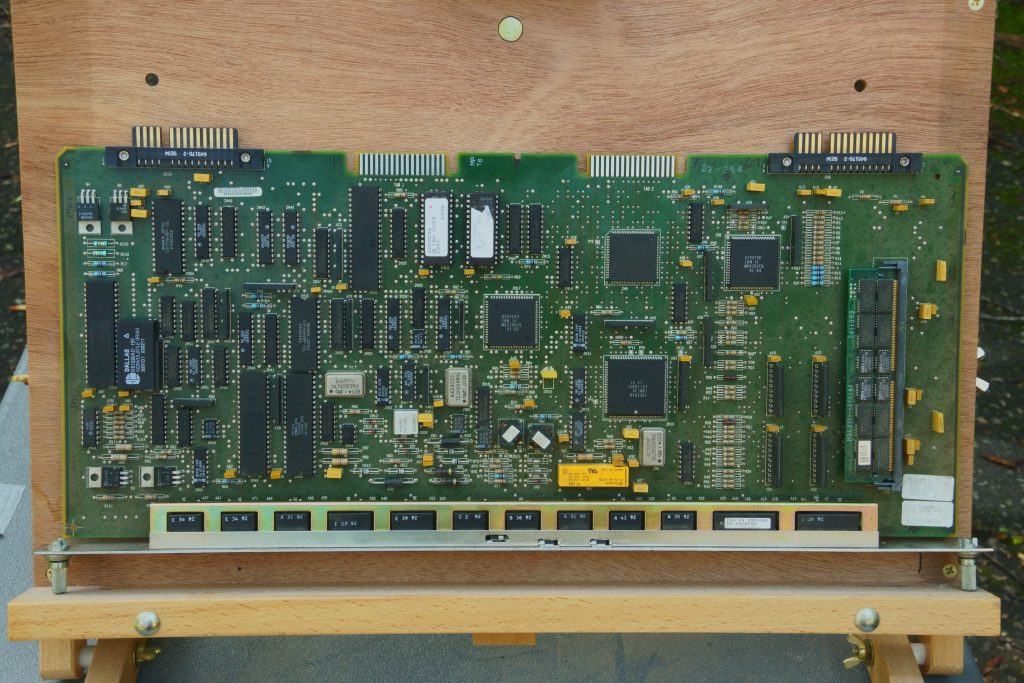
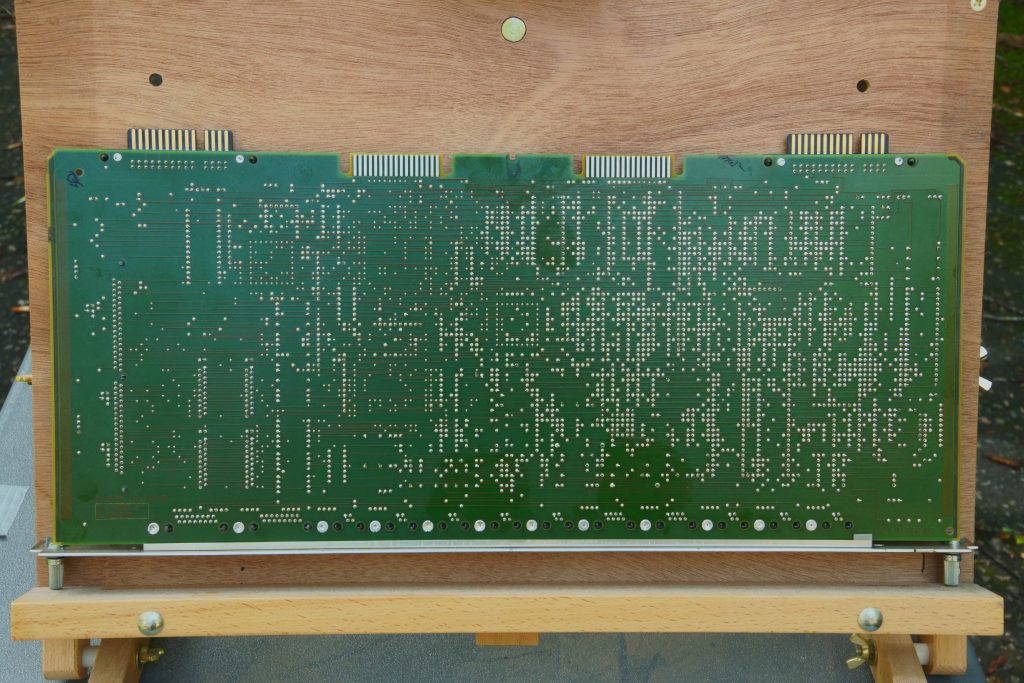
The second generation of 4683 terminals was the 4683-Px1 series, which featured an entirely new planar board likely taking design cues from then-current IBM PS/2 offerings. Our examples are the P21, but IBM also sold the P41 and the P61 which only differed in the amount of onboard RAM.
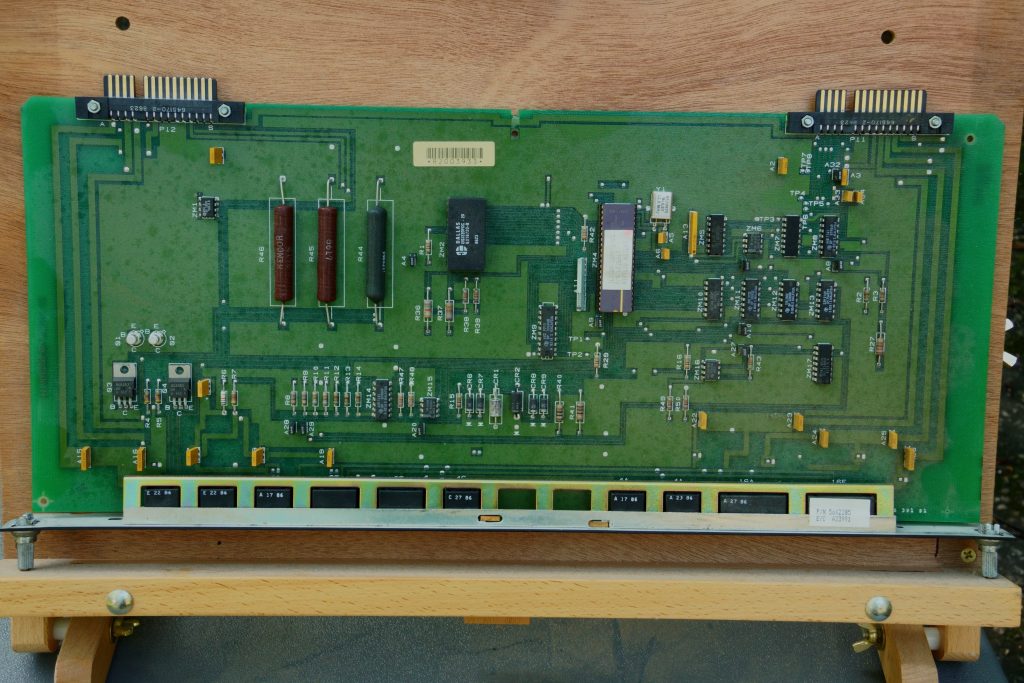
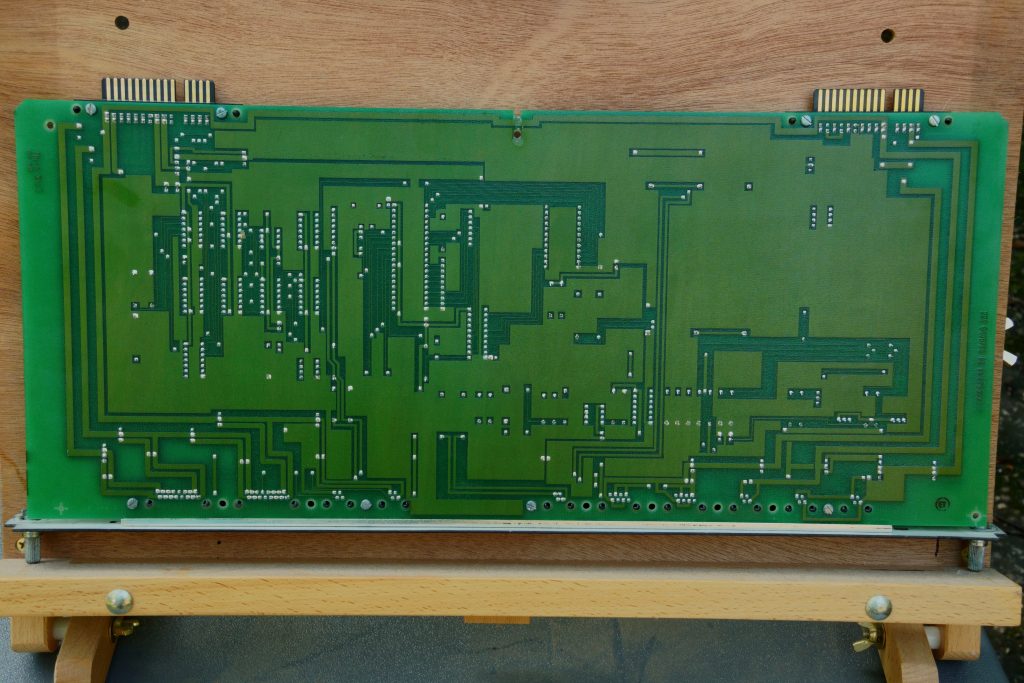
This board doesn’t look like much, does it? There’s only three main ICs – an EPROM, likely an RS-485 controller, and likely an Intel 8051 MCU (drink!) – and three giant power resistors. How can this be an entire PoS terminal? Simply put, it’s not. The Model 002 is what IBM referred to as a Partner terminal. It doesn’t connect to the Store Loop, it doesn’t run Concurrent DOS; it doesn’t really “run” anything. The Model 002 is really just a fancy RS-485 expander, designed to give stores the flexibility to put two terminals in a place where it was infeasible or impossible to run a second Store Loop line to. This is what connects to the 11 port on a Model 001 or Px1.
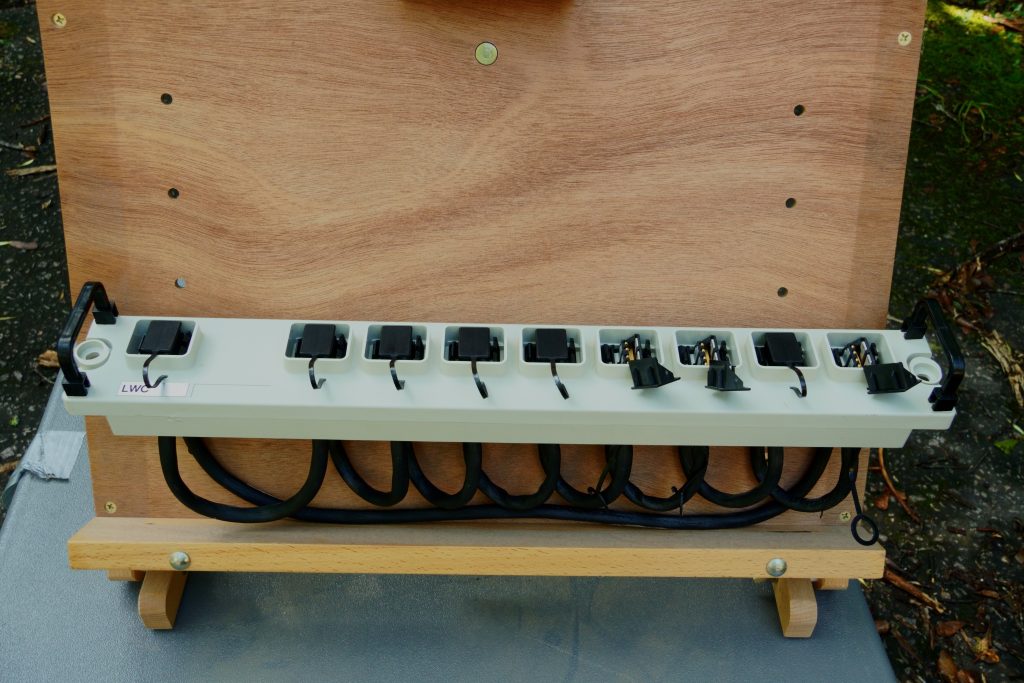
Your eyes deceive you: this is NOT a Token-Ring MAU. Yes, it is a rack-mount panel full of IBM Type 1 connectors, but look around on the back…
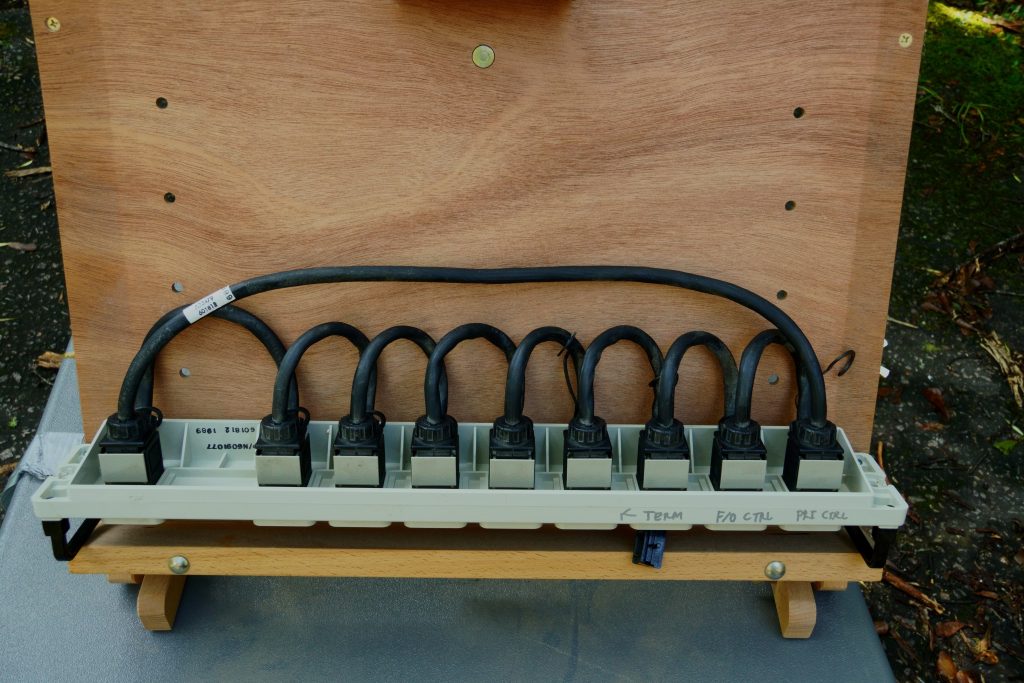
…and you’ll notice something is amiss. This is, in fact, a Loop Wiring Concentrator and it is a critical part of the IBM 4680 networking infrastructure. Let’s head back to the 1970s for a moment.
In the 1970s, computers were typically isolated machines, maybe with a modem or two, but the concept of “network computing” as we know it today hadn’t materialized outside of the ARPANET. There were no hubs, there were no switches, there was simply “the computer” spitting out some interactive data link protocol directly over some wire.
3270 terminals were typically connected directly to a control unit, with one coax cable connecting a single terminal.
5250 terminals were daisy-chained (“cable-thru” in IBM terminology) back to the host, meaning one cable could service many terminals.
Both implementations had their own advantages and disadvantages. The 3270 approach meant that if one cable became damaged or unplugged, all the other terminals in the building would stay running, but it meant running 100 separate coax lines to 100 separate terminals. The 5250 approach simplified cabling, but meant that if a cable mid-run were disconnected or damaged, all terminals after the break would drop offline. How do you solve this problem in a way that stores would be happy?
IBM was once quite a fan of loop-based communications. The IBM 8100, Series/1, 3600 and 4700 Financial Communication System, 3660 Store System, 4680 Store System, and arguably even Token-Ring are all loop-based communication systems. In the days before Ethernet, it simply made sense – using a serial loop allowed for devices to drop into and drop out of the loop without bringing the entire loop down so long as the device’s loop shunt relays were behaving themselves. It was an elegant, reliable solution using simple electro-mechanical parts dreamt up in the days before Ethernet and CSMA.
The IBM 4680 store loop is likely an evolution of the 3660 store loop, though not enough documentation survives to prove this. Where the 3660 loop was only a handful of bits per second, the 4680 loop ran at 38.4kbps. And take a wild guess what the protocol in use was? That’s right, it’s our old friend SDLC! It likely is a cut-down version of SDLC specifically adapted for a retail environment, but it’s funny to think about us IPLing a terminal over Super SNA World.
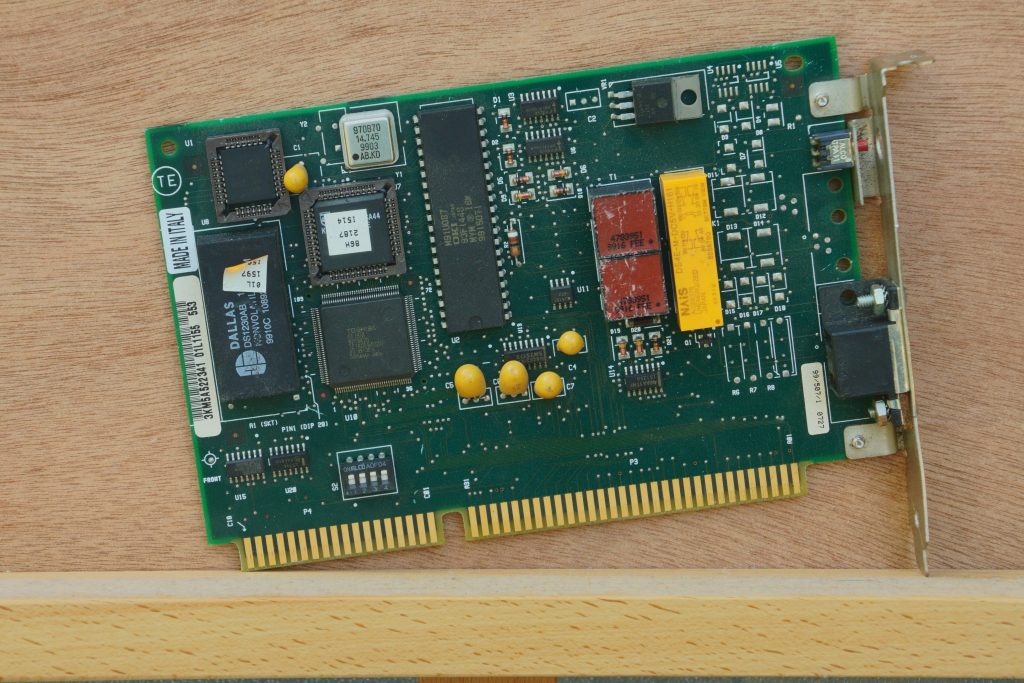
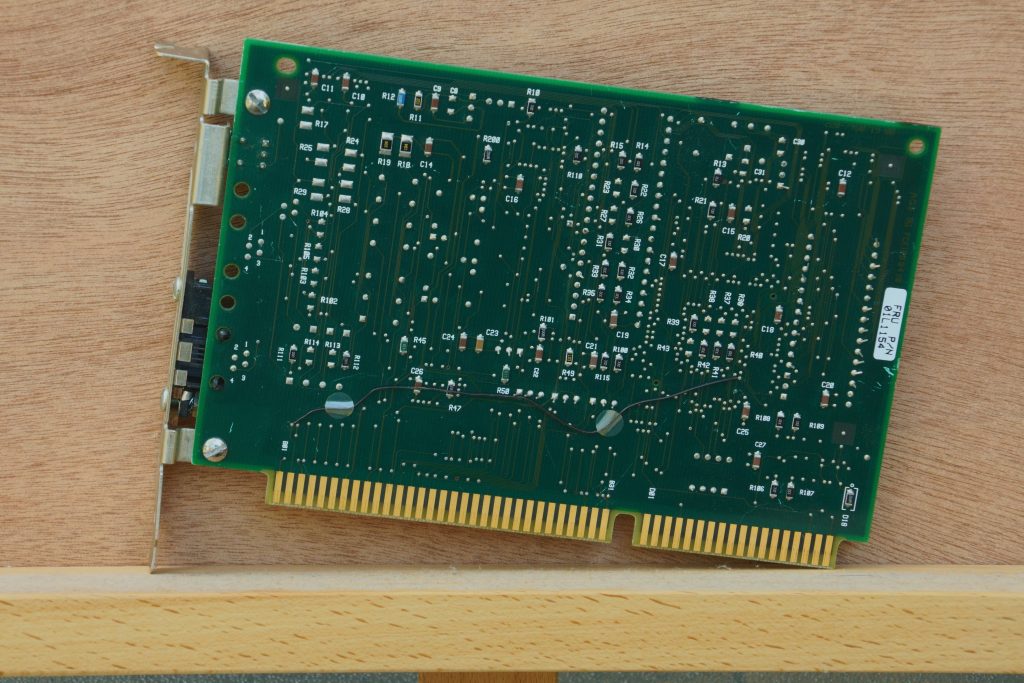
As part of our restoration project, we ended up with a handful of dedicated Store Loop cards for various controllers and terminals. Here’s a gallery of what we obtained.
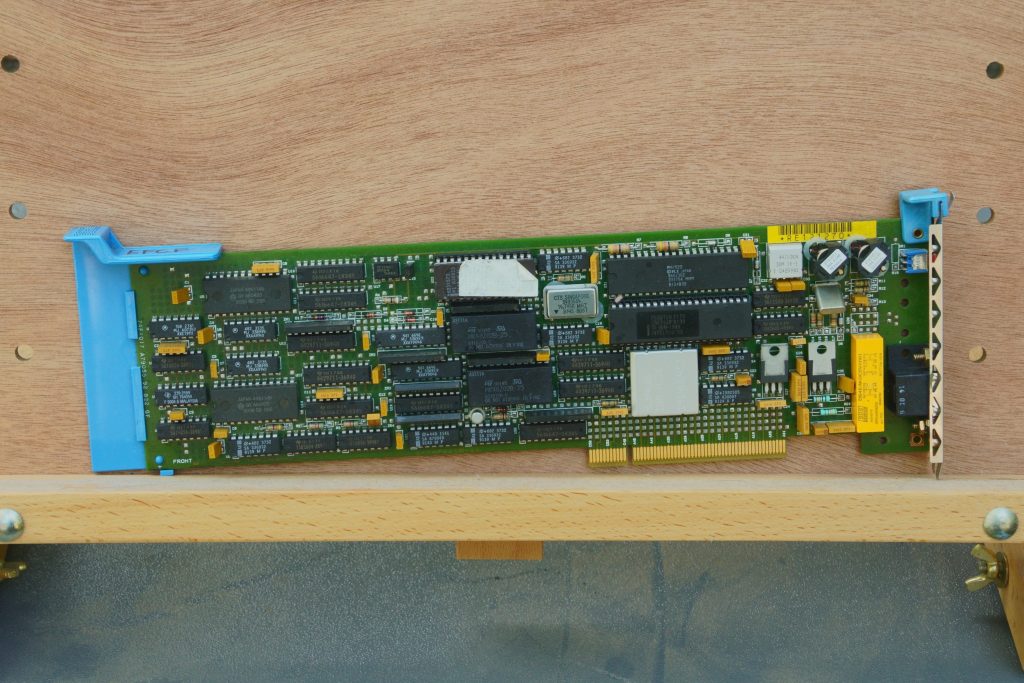
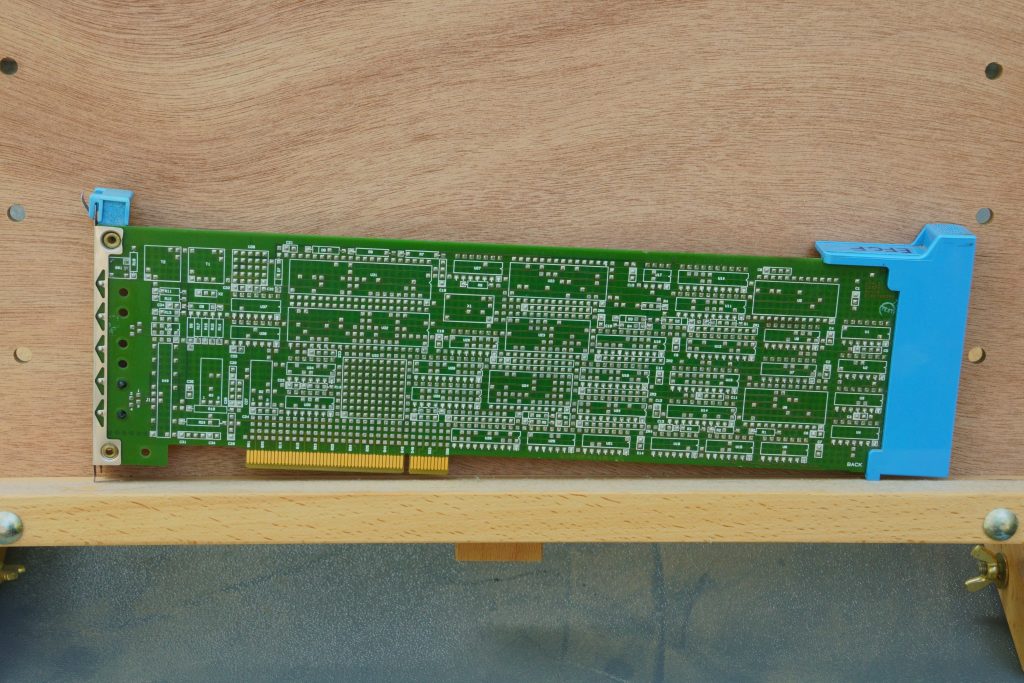
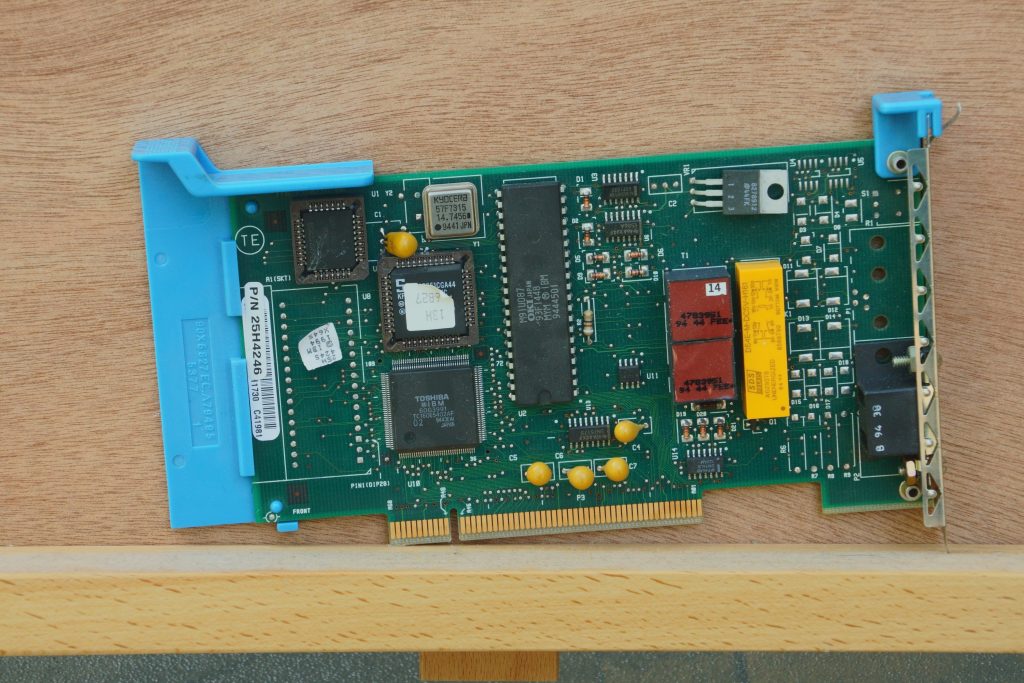
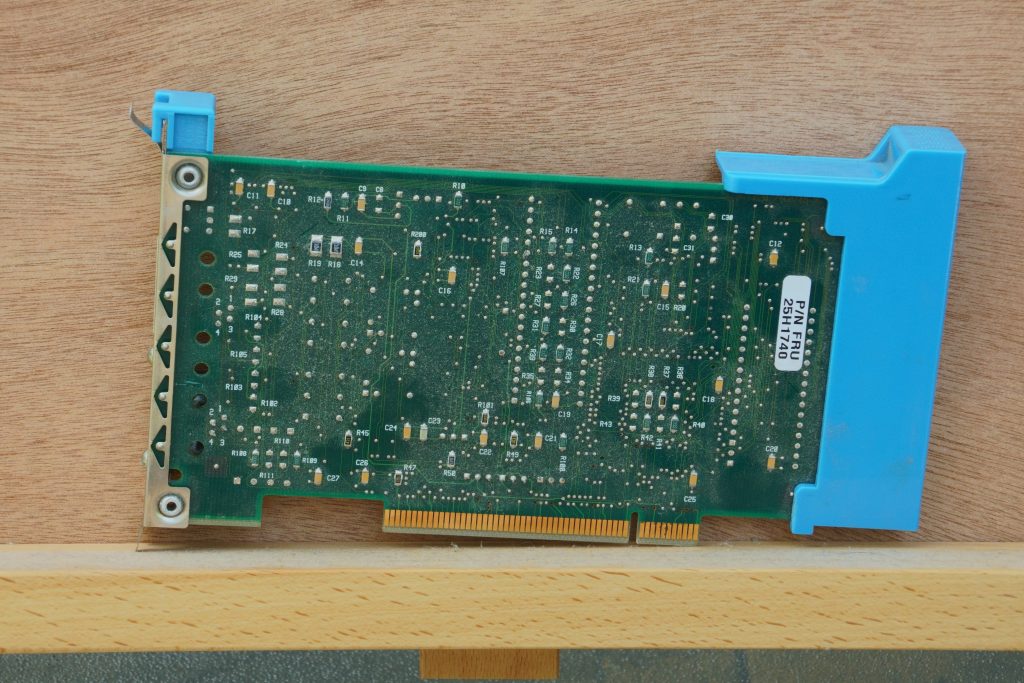
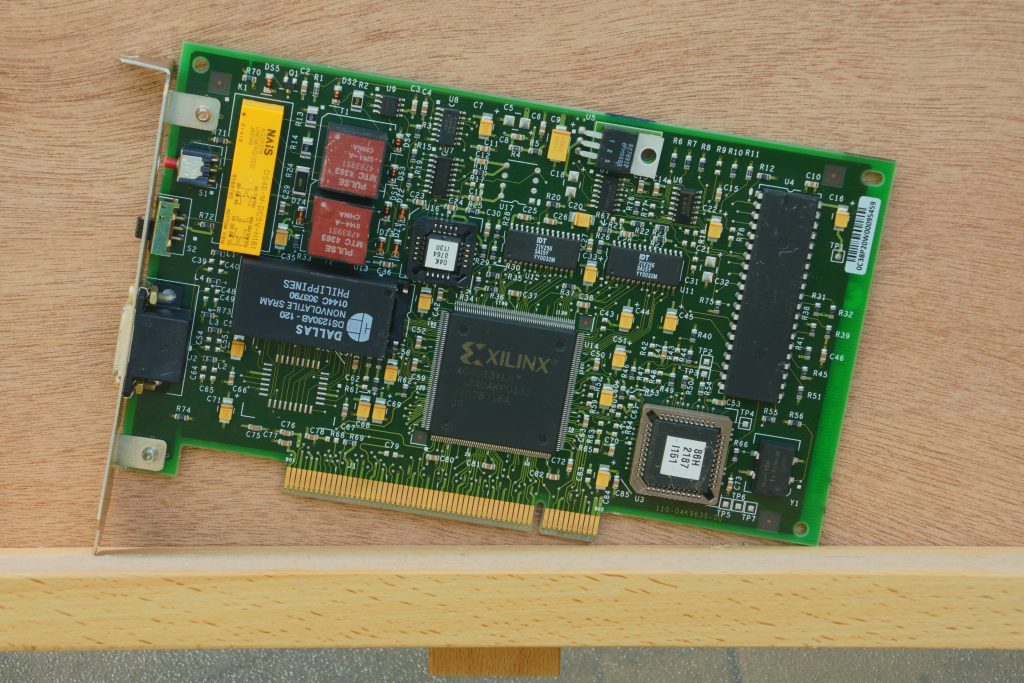
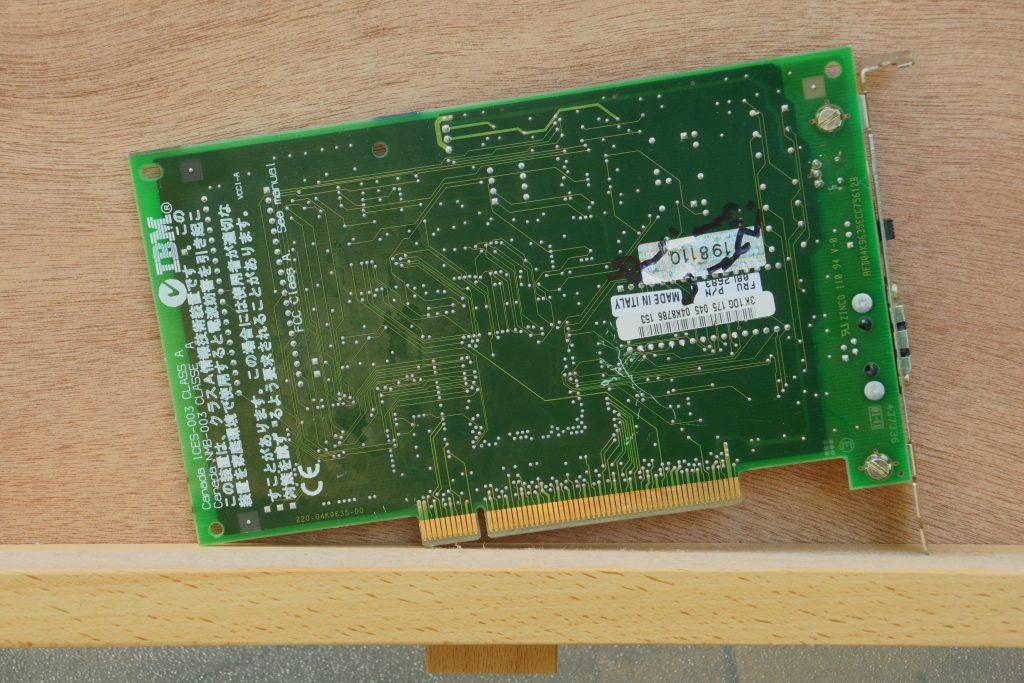
- First is a microchannel Store Loop Adapter, which would have been used in a PS/2 4680/4690 or 4684 Store Controller.
- Second is another microchannel Store Loop Adapter, but this one was pulled from a first-generation 4693 terminal. Notably it lacks the Dallas NVRAM chip and a dump switch, which according to Ardent Tool means this card can only be used in a 4693 terminal and not as a controller card.
- Third is a 16-bit ISA version of the Store Loop Adapter, which would have been used in second-generation 4694 controllers if the store still needed to operate 4683 terminals.
- Lastly is the PCI Store Loop Adapter, and this is the whole reason why we were able to use a more modern 4800-783 as our store controller.
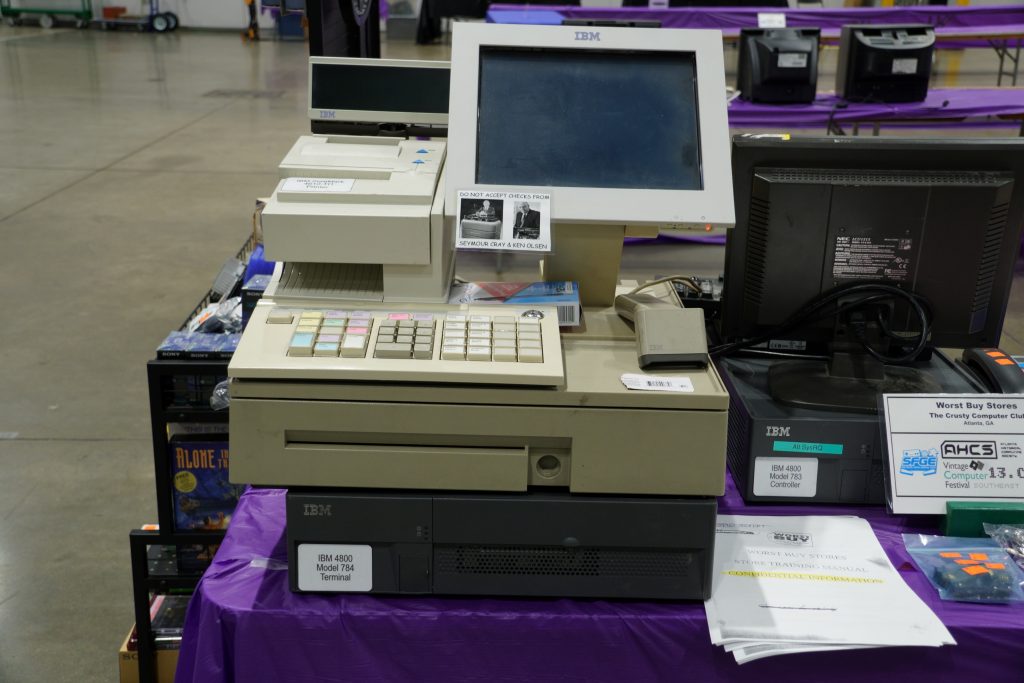
Our last stop this year is the “Anachronism Terminal;” or a terminal we put together from as many mismatched pieces as we possibly could. Why do this? We really, truly wanted to drive home the point that 4690 OS is an extremely backwards-compatible system, so we built a terminal out of all the random, leftover parts we had from the project:
- A SurePOS 4800 Model 784, with Core 2 Duo and 4GB of Main Storage
- Enhanced Mode 4690 OS – PXE Netbootable Linux image that runs 4690 OS applications in emulation
- 4680 Cash Drawer
- 4690 50-key keyboard
- IBM SureMark 4610 Model TI1 thermal printer
- 4680 Barcode Scanner
- Toshiba VFD II Pole Display
- IBM 4820 Touchscreen LCD monitor
In our final part, we’ll speculate on just what happened to all these 4680 terminals that were once everywhere.