It’s the end of yet another Vintage Computer Festival, and with it comes the end of our little 3-part history tour. Let’s take a look and see what happened to the 4680/4690 Store Systems and all of IBM’s retail business division.
When I was growing up, it seemed like the 4690 terminals were everywhere. I have distinct memories of going into one of our mall department stores in liquidation and seeing the 4683 terminals behind the cash wrap and wanting to buy them even though I was 4. To recap from our first post in this history series, here’s a small list of stores we know were on some variant of the IBM Store Systems:
- Ames (3660, 4680) – defunct
- Bruno’s / Food World (4680, 4690) – defunct
- Winn-Dixie (4690, TCx) – defunct
- Walmart / Sam’s Club (4680, 4690, TCx)
- Kroger (& subsidiaries) (4680, 4690, TCx/SurePOS Ace)
- Safeway (3660, 4680, maybe 4690, maybe TCx?)
- Macy’s (4680)
- Ingles (4690, TCx)
- Parisian (4680) – defunct
- Zayre (3680) – defunct
- Walgreens (4680, 4690; now uses custom in-house solution)
- Wegman’s
- Woolworth’s
- Giant Eagle
- Ron & Lloyd’s
- Food Lion
- Bradlee’s
Each of these stores at their peak had hundreds, if not thousands of stores back when the 3660, 4680, and even early 4690 were at their zeniths. Presumably, millions of terminals were sold in the US and across the world. So why is it that the only terminals you can find on the used market are SurePOS 4800 (~2009) and 4900s (~2013)?
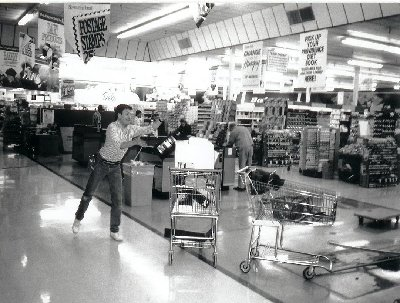
“I ran across this picture of me taken in the early 1990s, it is of the Oak Harbor Safeway store as we were removing turntable check stands and IBM 3663s and installing IBM 4683s. I am throwing a IBM 3663 keyboard into a cart.” explorersea, Groceteria
No one ever loved a cash register.
A retail job was simply the very first job most of us held when we came of age. Underpaid, overworked, and forced to ring up hundreds of customers per day at breakneck speed where the only acknowledgement of hard work might have been your boss giving you a Coca-Cola for free on your next lunch break. It’s the job that just made ends meet, it’s the job that paid your college tuition. It’s the job that when you left, you never looked back on – with rose-tinted glasses or otherwise.
It’s not just the emotional weight, either. What business would want an obsolete point-of-sale system where the parts have all been run hot and hard, where new parts can’t be obtained, and new software isn’t being written, and – in recent years – where regulatory compliance may be difficult or impossible? For the hobbyist, how would you have run a System/370-attached 3660 at home, or what would you do with a personal 4680 unless your job was to write point-of-sale software?
Mainframes and midrange machines survive because they were general purpose computers that could be resold and repurposed. A cash register’s job is only to register cash. And like so many other industry niches where dedicated hardware was once common, that niche has been completely swallowed up by the PC, and the industry has never looked back since.
Singer System Ten. NCR 250 and 1250. Data Terminal Systems. IBM 3660 and 4680. Likely dozens of other bit players that have been forgotten to the sands of time.
They’re all gone.
Out of the thousands of IBM 4680 Store Systems that were sold and once in use across the whole world, we only know of a handful that still exist in the world – we own three 4683 terminals in our collection, and know of three other 4683s in private hands as well as two 4684 store controllers.
Just eight 4680s remain in the world. Even fewer than known System/38s.
This is why it’s important to preserve computer history while we have a chance. One day, there might not be any more surviving examples of a thing. Help us keep these systems alive – if you have or know someone who has a 3660 Store System or 4680 parts, contact us today.
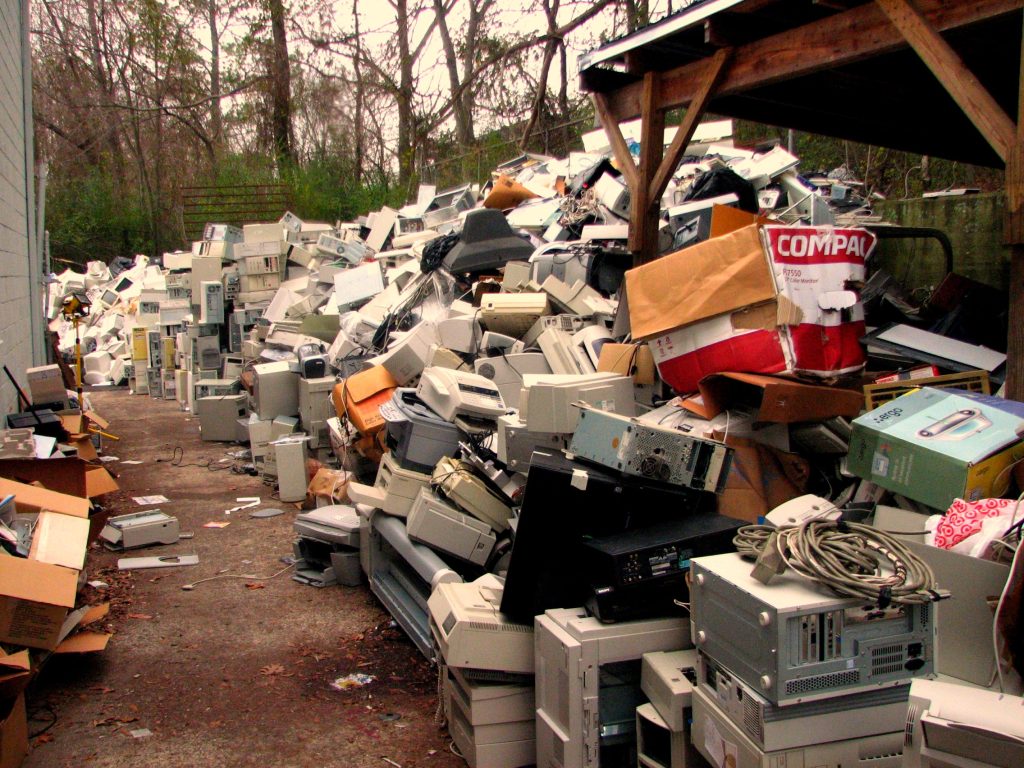
Header Image courtesy Curtis Palmer, licensed under Creative Commons – https://commons.wikimedia.org/wiki/File:Electronic_waste.jpg
